October 29, 2009
Spokes
The bicycle was locked to a sign on a corner next to a building. Note the plastic bag over the seat. It's been raining every other day here. (Click on the photos to enlarge them.)
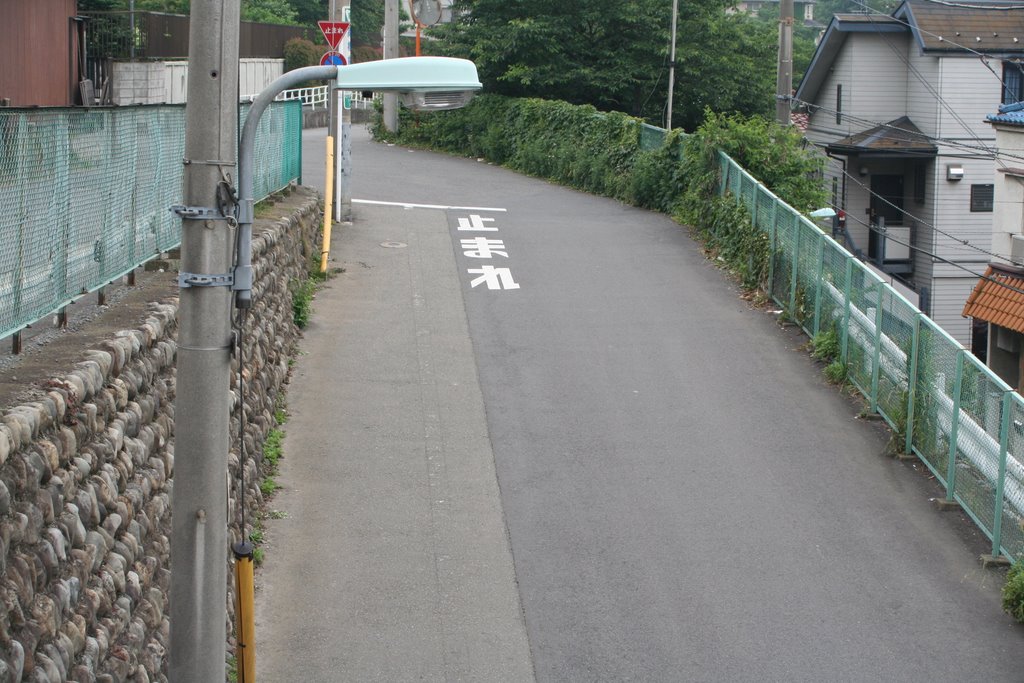
That round thing in the street is a light. It flashes red in the evening. The big white kanji on the street is the beginning of the word tomari. It means "stop".
Posted by
Annie Donwerth Chikamatsu
at
4:05 PM
0
comments
Labels: bicycles, October in Japan, signs
August 05, 2009
Solar Powered Sign
Posted by
Annie Donwerth Chikamatsu
at
12:36 PM
0
comments
Labels: August in Japan, signs
March 25, 2009
A New Sign This Spring
It looks like a kite, but it's a newly painted sign on our street. Our street was torn up recently to work on the water pipes. They finally finished the pipe work and paved the street. They chose to use asphalt. Not my favorite choice. It stinks! Especially in the hot summer sun.
This diamond sign means slow down. It's really big. That is a manhole on the left.
This was written near the end of the street. It says tomare. It means "stop" in English.
This one is kanji, a Chinese character for the sound to. Click on the pictures so you can see the chalk lines they used to paint the characters.
This one is hiragana for the sound ma.
This one is hiragana for the sound re.
Kids Web Japan--kanji
--hiragana chart
Posted by
Annie Donwerth Chikamatsu
at
9:27 PM
0
comments
Labels: signs
March 24, 2009
The Machine that Painted the Street Signs
Workers used this machine to paint the signs on the street. They finished using white paint and moved on to yellow. I didn't see them use either one! They were finishing up when I came back with the camera.
Click on the picture to enlarge it. There is a flame under the paint. Can you see it leaping up?
The paint was loaded into the machine from the truck. It oozed down those chutes. It emptied from the chute into a vat.
Here is a close-up of the chutes on the truck.
The paint was then moved into a smaller vat by another shorter chute. The paint was heated in the smaller vat.
This is the gas tank.
Posted by
Annie Donwerth Chikamatsu
at
2:45 PM
0
comments
Labels: signs
January 10, 2008
October 11, 2007
Parking Lot
There is a number and a guard on each space.
After you park your car, this guard rises preventing you from leaving without paying. After you pay, the guard lowers.
Note: The triangular sign is a stop sign. It says tomare in Japanese. The first symbol is written in kanji. Then "ma" and "re" are in hiragana. Some words are a combination of both kanji and hiragana.
Posted by
Annie Donwerth Chikamatsu
at
8:26 AM
1 comments
March 12, 2007
A Sign Hanging from the Ceiling in a Hall
I looked up and saw this sign hanging from the ceiling in the hallway in a public building. If you read yesterday's post then you know where and why it was there. It was outside that small kitchen. I had never seen anything like this before. The first kanji means "hot water". The second one means "boil". The third means "room". The picture tells it all, though, don't you think?
Posted by
Annie Donwerth Chikamatsu
at
4:37 PM
0
comments
January 02, 2007
Closed for the Holidays
Here are examples of the New Year's signs on shops. They wish us a happy new year and tell us when they will be closed. Most stores and shops were closed on the 1st. Some of the bigger stores opened on the 2nd. Small family-owned shops usually stay closed for the first three days of the new year. This sign is on a sliding glass door. (The blue arrow tells us which way the door opens.)
This sign is on a metal shutter that comes down over the front of the store. This sign was taped above the mail slot.
Here is another sign on a metal shutter. The mail slot is on the right. Those are boars or inoshishi at the bottom of the sign.
Kids Web Japan--New Year's
Posted by
Annie Donwerth Chikamatsu
at
11:09 AM
0
comments
Labels: New Year in Japan, shops, signs
December 13, 2006
November 28, 2006
Map of Jindai Botanical Gardens
Posted by
Annie Donwerth Chikamatsu
at
8:11 PM
0
comments
Labels: signs
November 10, 2006
Curb Line
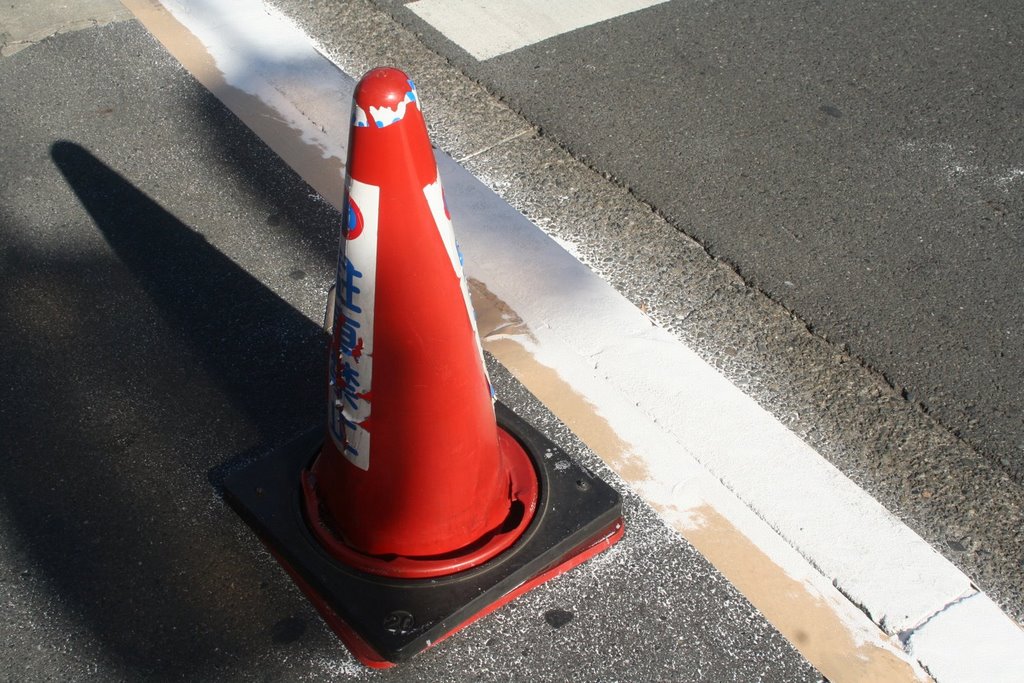
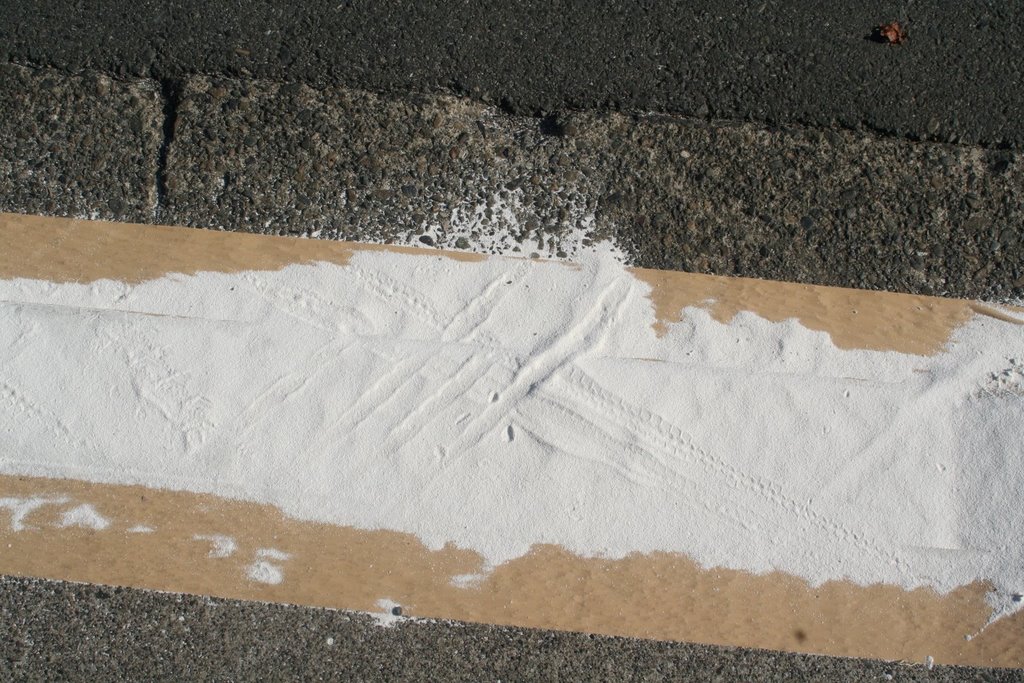
I was walking down the street as a worker was putting tape along the curb. Another worker was following behind him wiping stinky glue on the curb. I didn't have the camera at the time. Later I went that way again with Big Sister and the camera. They had put a stinky white powder on top of the glue.
This is the white powder. Looks like a bicycle crossed here.
This worker was spreading the powder along the curb. It was a little windy, so some of the powder blew across the sidewalk and street. Can you see the sign painted on the sidewalk? That's a "no smoking on the street" sign.
Still smoothing it along the curb. Then he pressed it down with a roller.
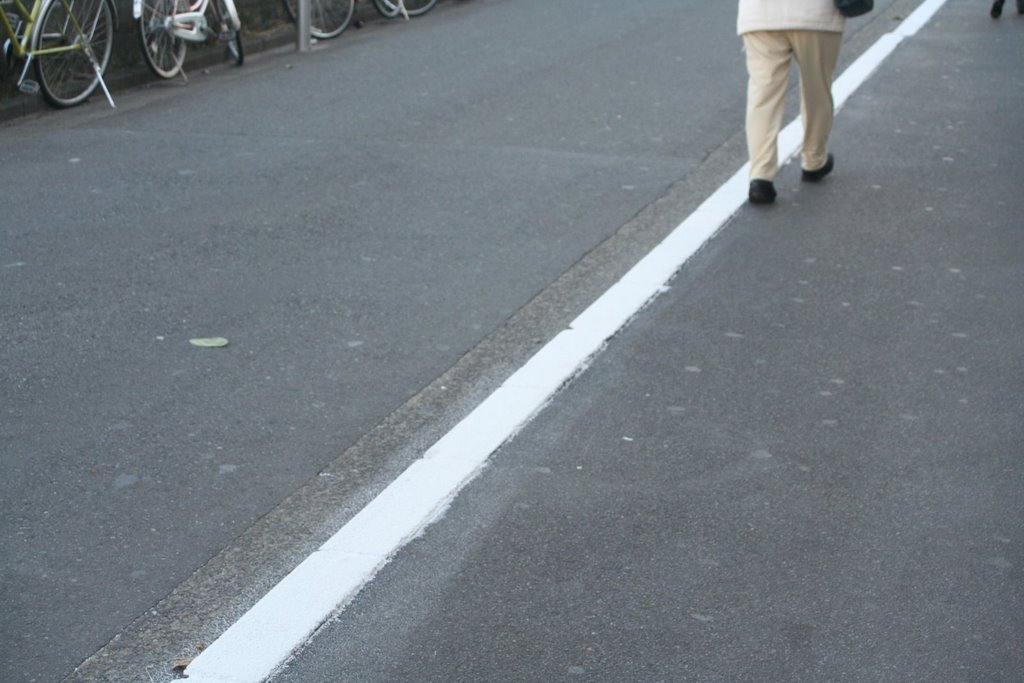
On our way home we passed this way again. The tape was gone and the powder was pressed down. This white line will make it safer. We can now easily tell where the sidewalk ends and the street begins. I have seen many people stumble into the street not knowing where the curb was. I have done it, too.
Posted by
Annie Donwerth Chikamatsu
at
10:24 PM
0
comments
Labels: city streets, signs
October 13, 2006
On the City Street
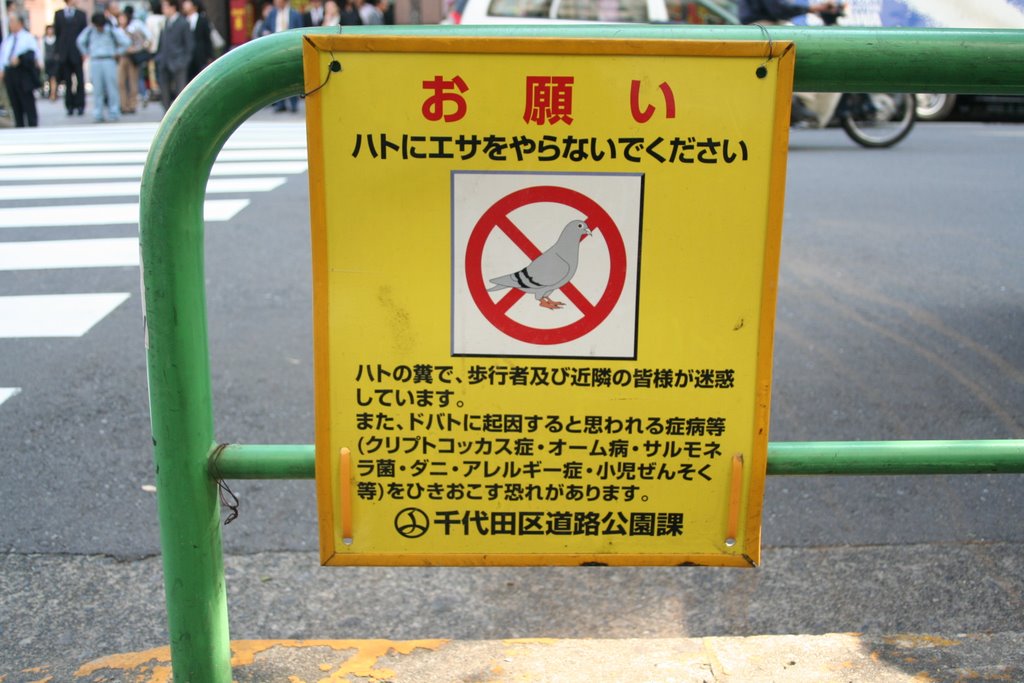
When we went into the city the other day, we parked the car on the street. Here are some of the things I saw while I waited for Papa. He ran an arrand. Above is a sign on the street. It asks us not to feed the pigeons. It goes on to warn us about the dangers of pigeons; salmonella, mites, allergies, etc.
(The crowd in the background is waiting to cross the street.)
I turned around and saw this sign on the sidewalk. It was near the pigeon sign. This sign asks us not to walk and smoke. It is against the law. I had seen commercials on TV advising us not to smoke on the street. I had never seen signs like these.
On the way home from our little train station yesterday, I saw a big sign like this one had recently been painted on our sidewalk. There was a stream of people going down the narrow sidewalk, so I couldn't stop to take a picture.
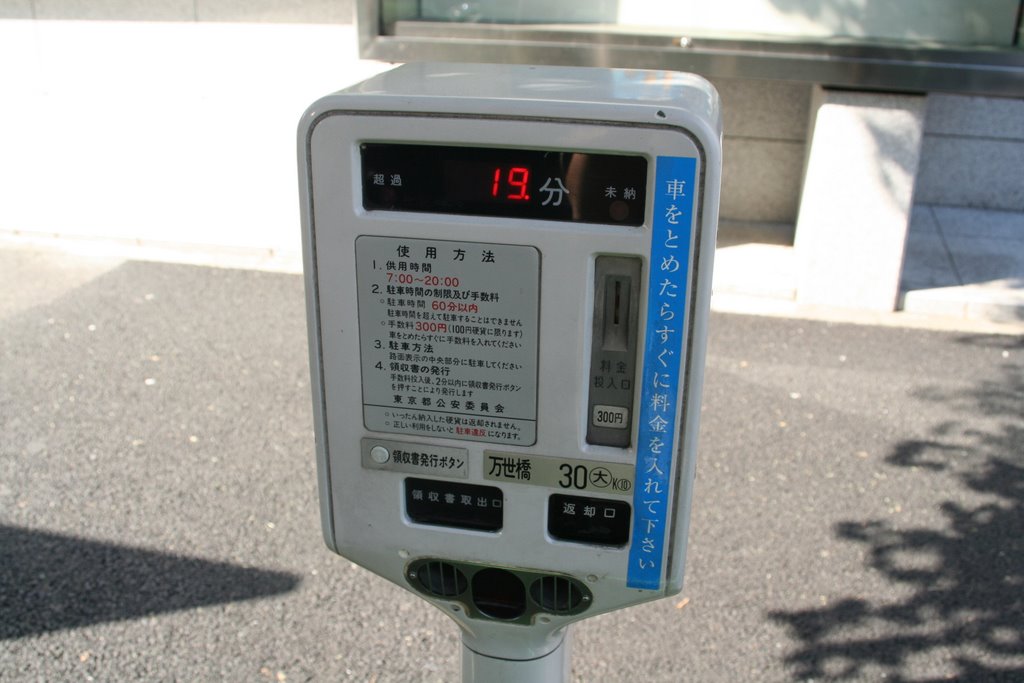
This is the parking meter. For 300 yen, we could park for 30 minutes. We didn't stay that long.
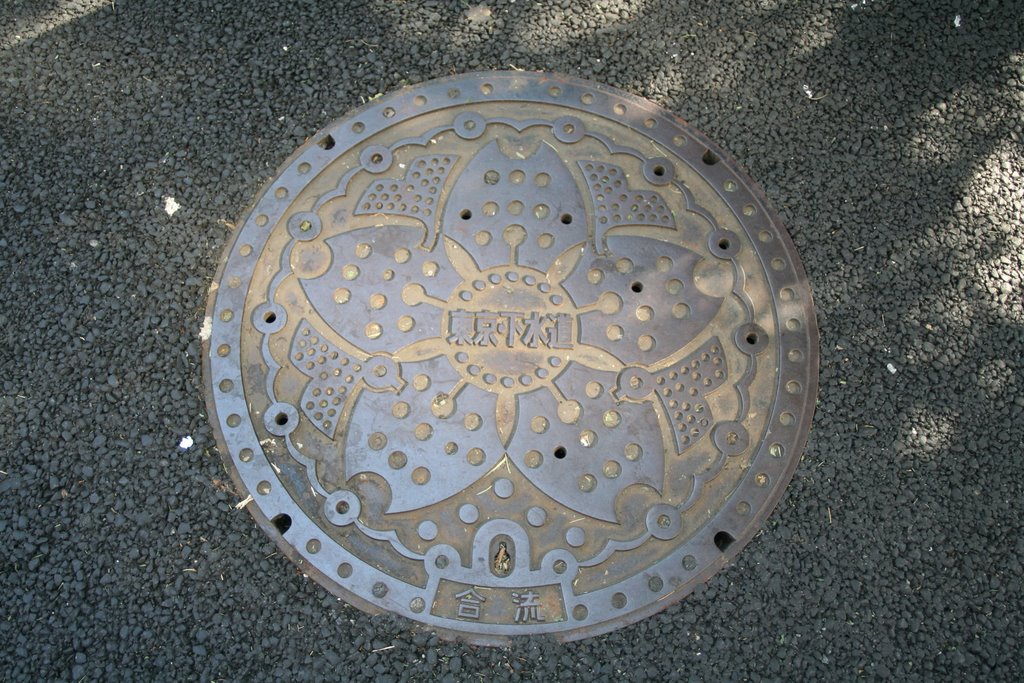
This is one of the manhole covers for this area. The design is a sakura or cherry blossom.
Posted by
Annie Donwerth Chikamatsu
at
9:41 AM
0
comments
Labels: city streets, manhole covers, October in Japan, parking, signs
July 19, 2006
On the Highway in Tokyo

Most of the highway here has two lanes going the same way. High walls separate the lanes from the lanes going the other way. You can sometimes go miles and just see nothing but walls on both sides. There is little or no shoulder of the road so if there is a problem with a car or an accident there is nowhere to get out of the way. Everyone would have to stop. It would cause a traffic jam that could last hours.
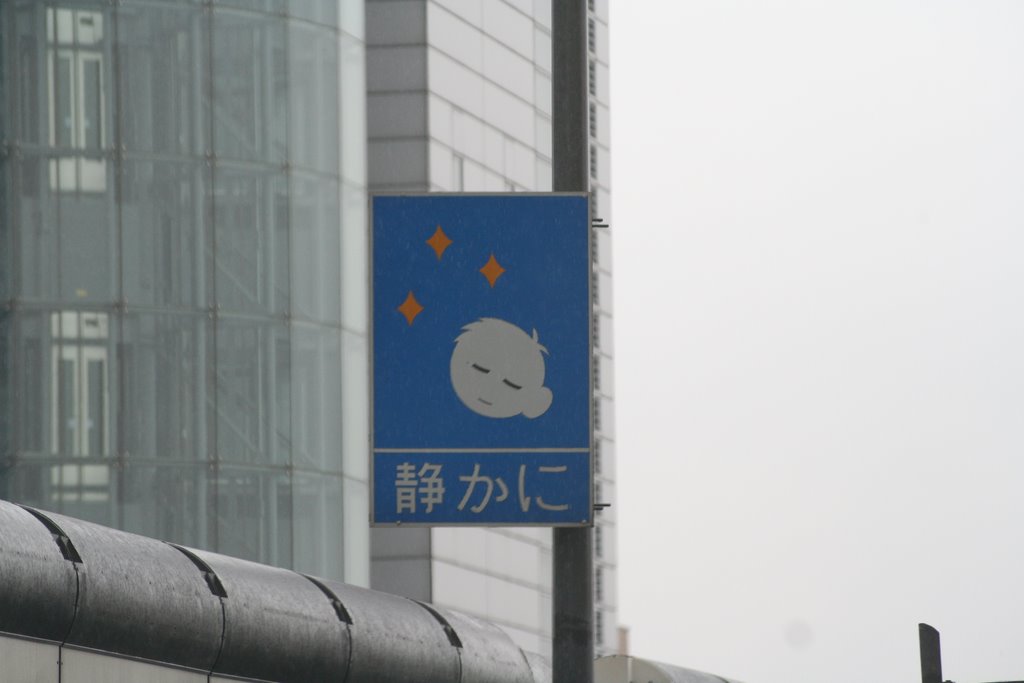
The sign above tells drivers to drive quietly. It says "quiet" in Japanese. What does that mean? No noisy motorcycle riding, horns, etc. Actually, horns are rarely used here.
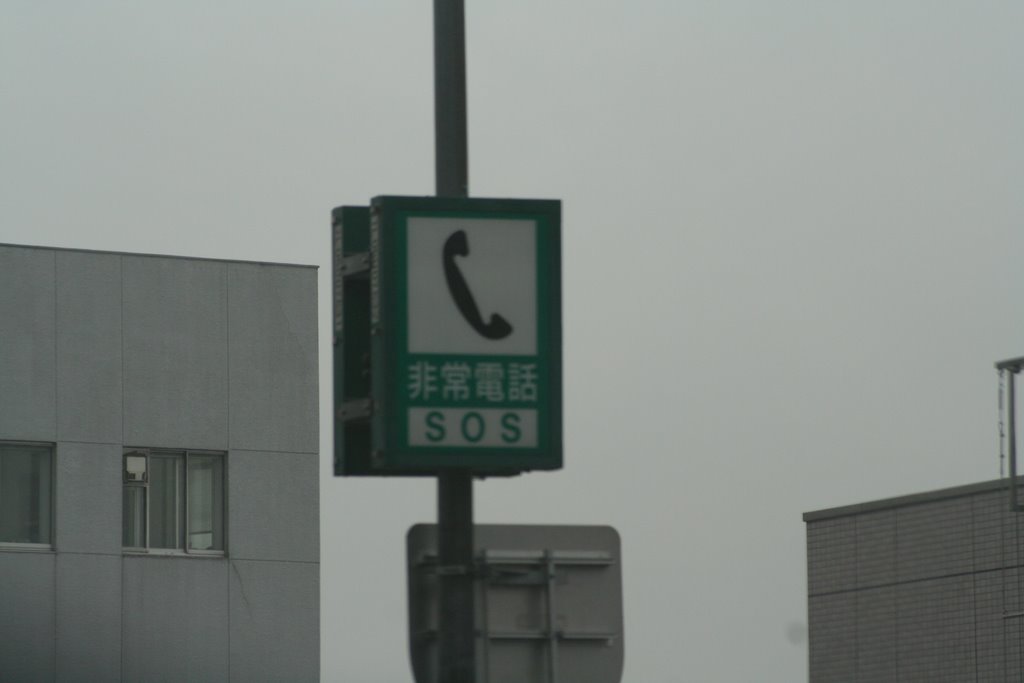
This sign lets drivers know that there is a phone up ahead for emergency use. It says "SOS".
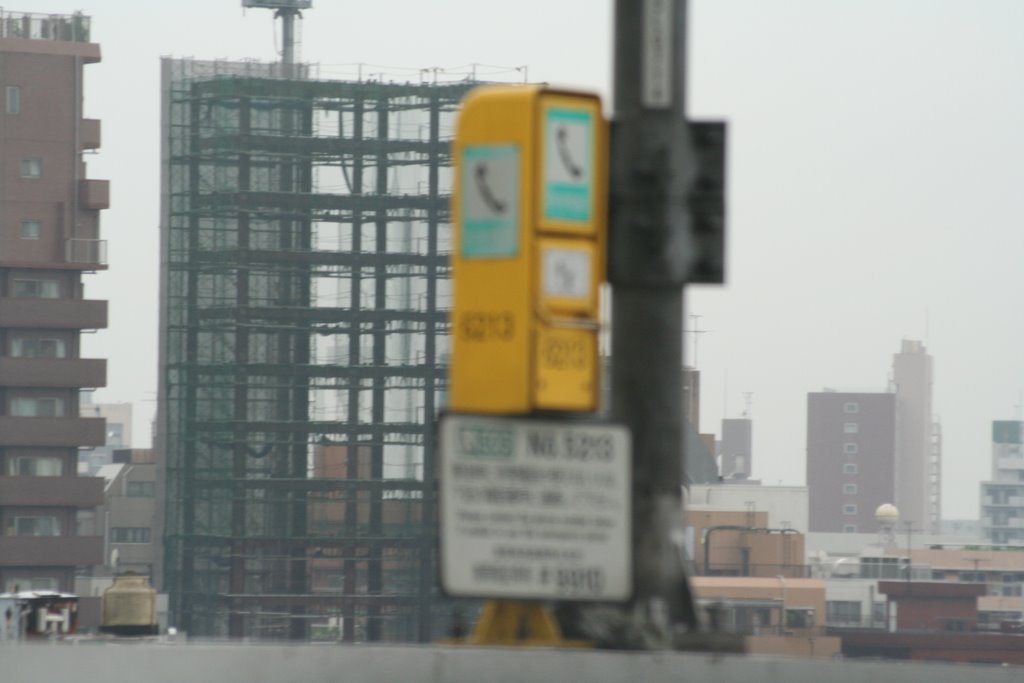
This is the phone. I took this picture as we drove by so it's blurry. I will replace it when or if I can get a better one.
This sign points to the nearest emergency exit. There was one 120 meters away. I was unable to get a picture of the exit. I saw it as we passed. It was a staircase that led down to the street below the highway.
Posted by
Annie Donwerth Chikamatsu
at
10:44 PM
2
comments
Labels: highway, July in Japan, signs
June 27, 2006
On the Street: Stop Signs 2

Some stop signs are painted on the street.
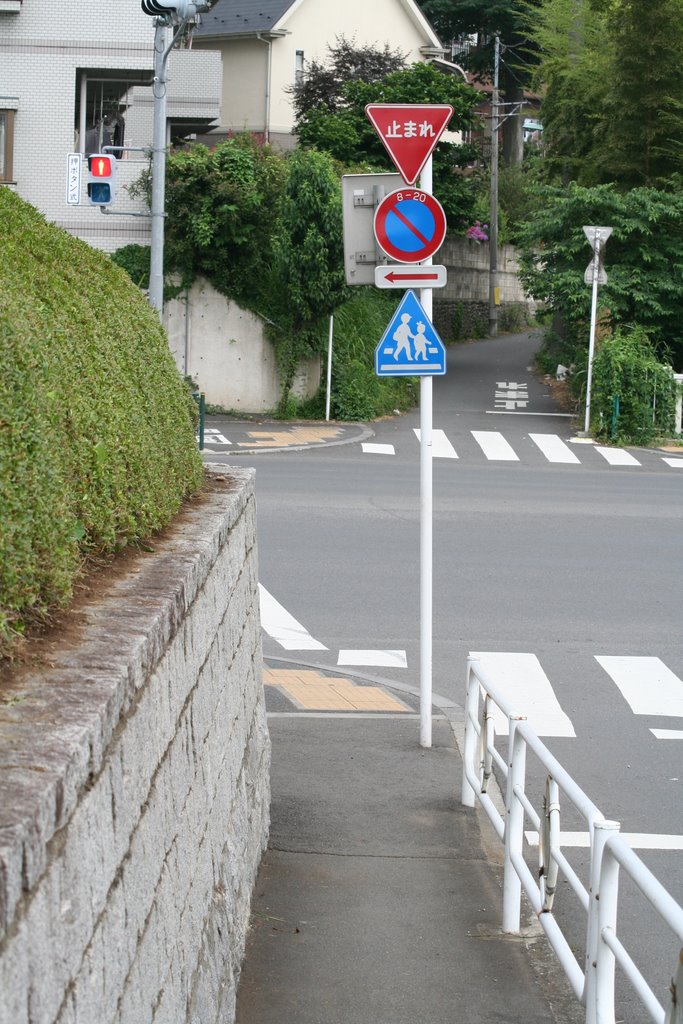
Some stand on the sidewalk.
Some share space with other information.
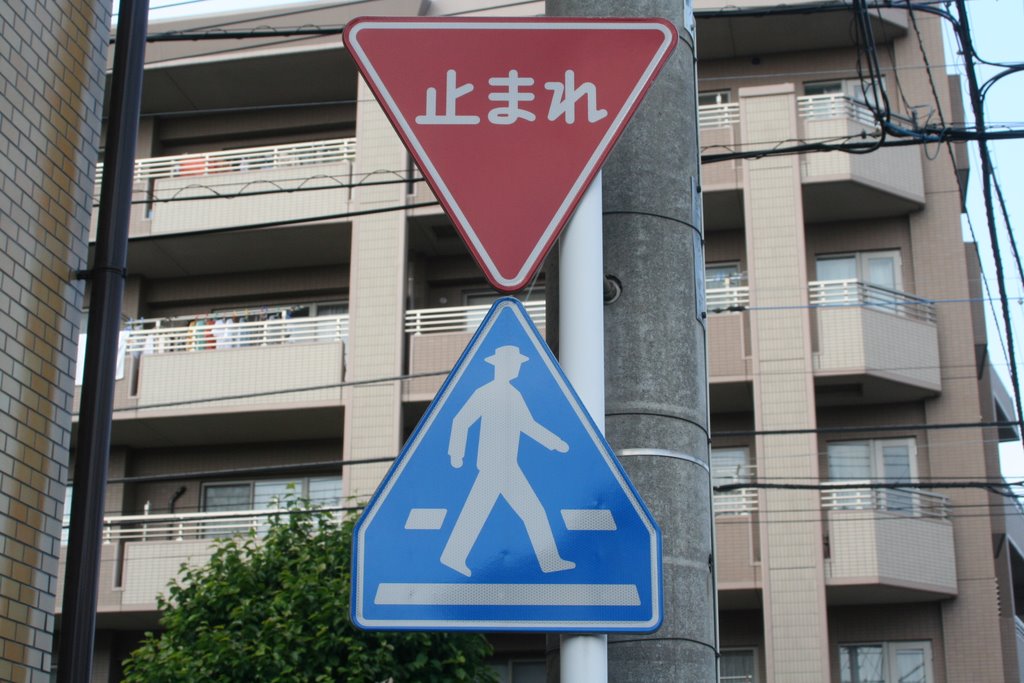
The upside down triangle is the stop sign. Tomare is written on it. Notice the first symbol is not hiragana. It is kanji, the symbols adopted from the Chinese language.
What do you think the blue signs mean? One has a man walking between two white lines. The other has two children.
Under the round sign, there is an arrow. Can you figure out what that means?
Posted by
Annie Donwerth Chikamatsu
at
11:38 AM
0
comments
Labels: city streets, June in Japan, signs
June 26, 2006
On the Street: Stop Signs

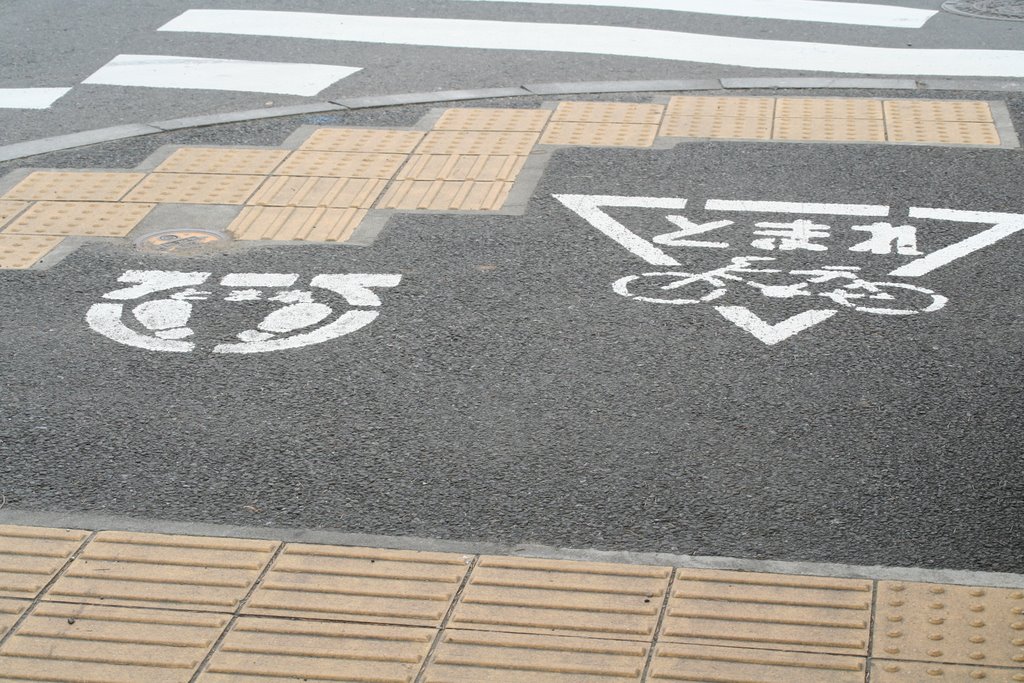
Sometimes stop signs are printed on the sidewalk.
This sign tells pedestrians to stop. It can be read by all ages. First, the graphics tell what to do. In addition, the Japanese word tomare is printed in hiragana above the footprints. Even young children can read words written in hiragana.
This one tells bike riders to stop. Tomare is written in hiragana above the bicycle.
In my area, these signs are sometimes found on smaller cross streets where there is no traffic light. Sometimes there is a sign painted on the street telling motorists to stop.
People ride their bicycles on the sidewalks here. When I first came to Japan I was given some really good advice. I was told to walk in a straight line and not to make any sudden moves. Also, to look back when I change "lanes" on the sidewalk. Bike riders see you from a distance. They will pass you if you're in their way. If you jump out of your "lane", they will hit you. Bikers are supposed to ding their bells as they come up behind you, but often they don't.
Note that there are yellow raised lines on this street. Not all streets have them. They are for blind people to use to walk down the street. Note, too, that the yellow strips closest to the crosswalk (the white stripes in the street) have raised dots. They tell the blind person to stop.
Posted by
Annie Donwerth Chikamatsu
at
8:15 PM
0
comments
Labels: city streets, June in Japan, signs