
I have been wanting to take a picture of the postman in Tokyo. I keep missing him. It seems I always catch a glimpse of one as he is passing by. As we were having lunch, the postman of this village zoomed by. I ran out of the shop, but he made no other stops down the street. Wouldn't that have been a cool picture? A postman delivering mail to a thatched roof house. I went back in to finish my lunch. A little later, he zoomed past going the other way. We all looked at each other and laughed.
This is one of the hotels. Below is a closer look at the beds (futon) hanging out the door. They are airing them out. Laundry from the hotel is on the line outside, too.

Here is a house that has a small soft cream stand outside on its porch. See that big plastic soft cream on the porch? We sat on the benches there and had ice cream after lunch. Beds and laundry were hanging outside here, too.
August 22, 2006
World Heritage Site: Other Village Business in Ainokura

World Heritage Site: On the Hills of Ainokura

This temple was on a hill in the village. There was a huge electric pole behind it.
This was the temple's old basin that was used for washing hands. It had no water in it.
Up another hill behind all the old thatched roof houses, there was a modern community center.
August 21, 2006
World Heritage Site: Thatched Roof Village in Toyama Prefecture
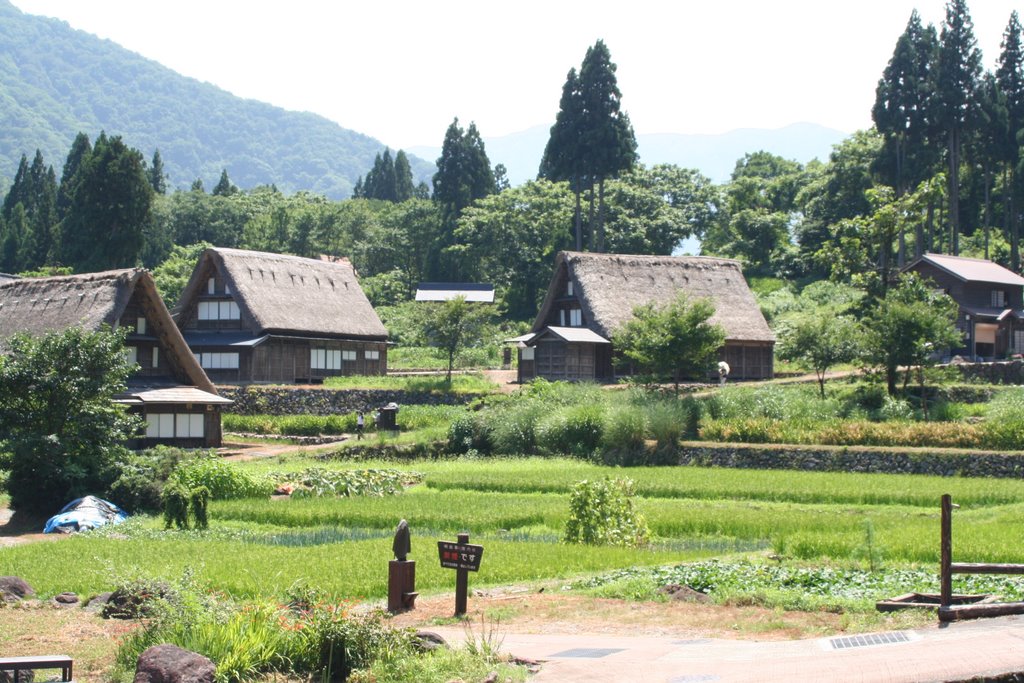
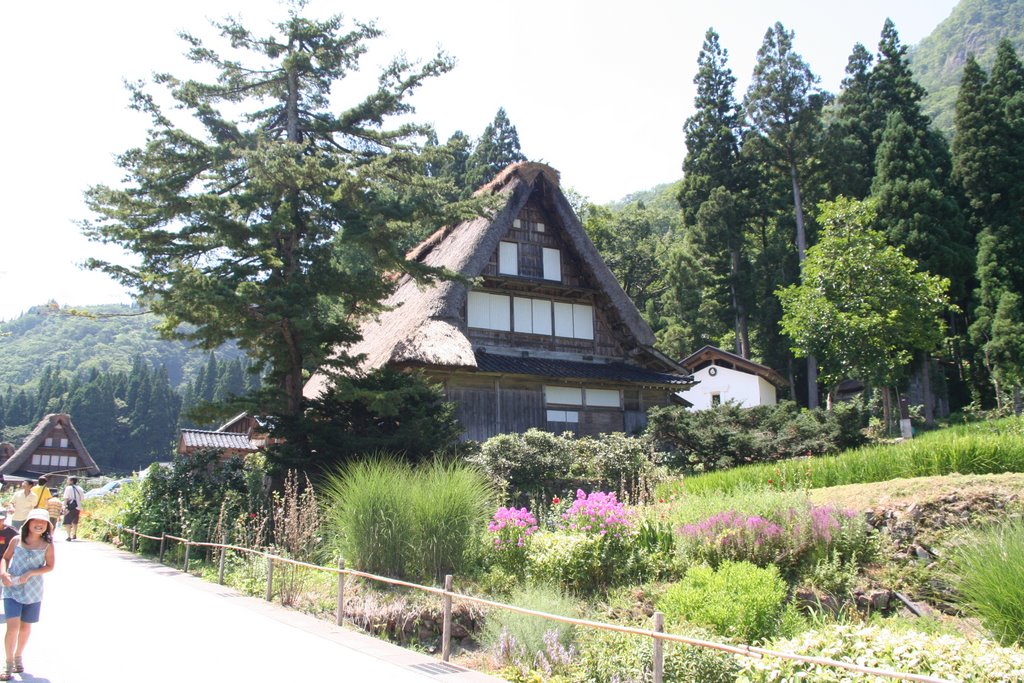
After visiting and staying with friends in a small town in Niigata Prefecture, staying overnight in a Japanese inn, and making paper at the Japanese Paper Experience House, we visited Ainokura Gasshouzukuri Shuuraku in Toyama Prefecture. This village of thatched roof houses was named a World Heritage Site by UNESCO in 1995. People still live in these houses. Some have small shops on the first floor. Two of them are inns.
For more information:
Gassho-style Farmhouses
Ministry of Foreign Affairs of Japan
Japan Guide
Shirakawa Village
World Heritage Site: Oldest House in the Village of Ainokura Gasshouzukuri Shuuraku
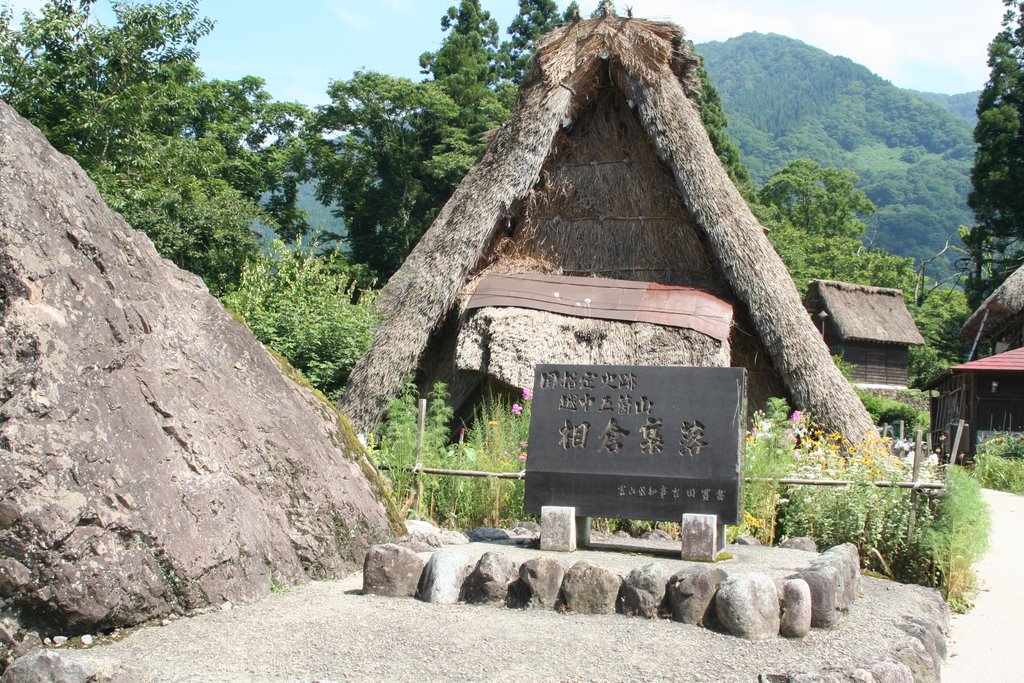
The oldest house in the village is over 300 years old. The village, however, was established longer ago.
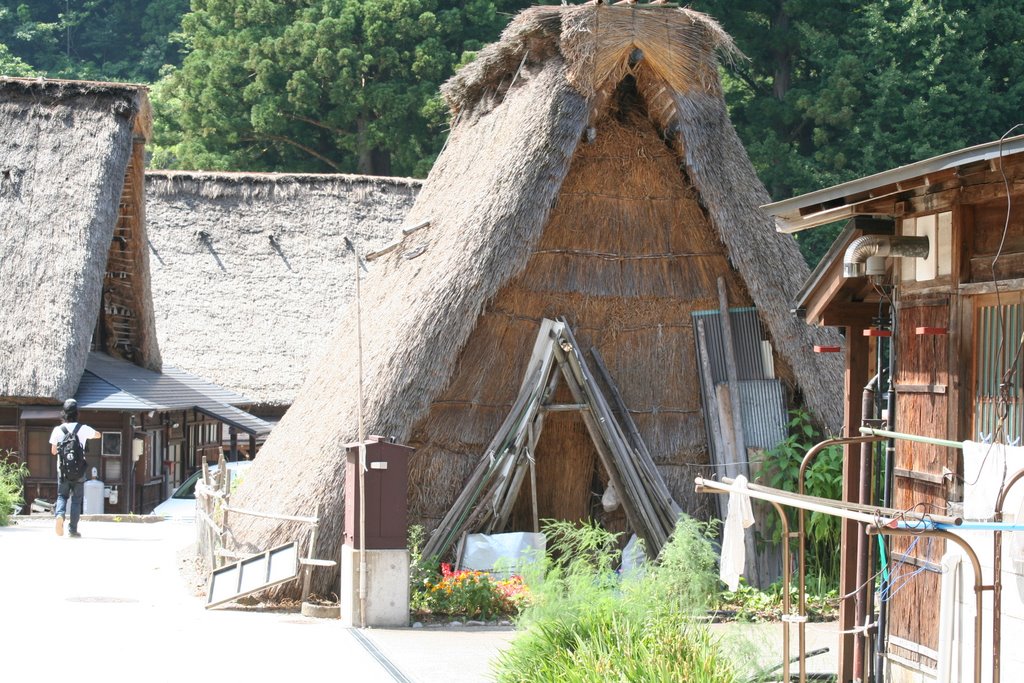
This is the back of the oldest house. No one lives in this house.
World Heritage Site: Close-Ups of Thatched Roofs in Ainokura Gasshouzukuri Shuuraku


Rain spouts at the top of a roof.
Wooden stakes along the middle of a roof.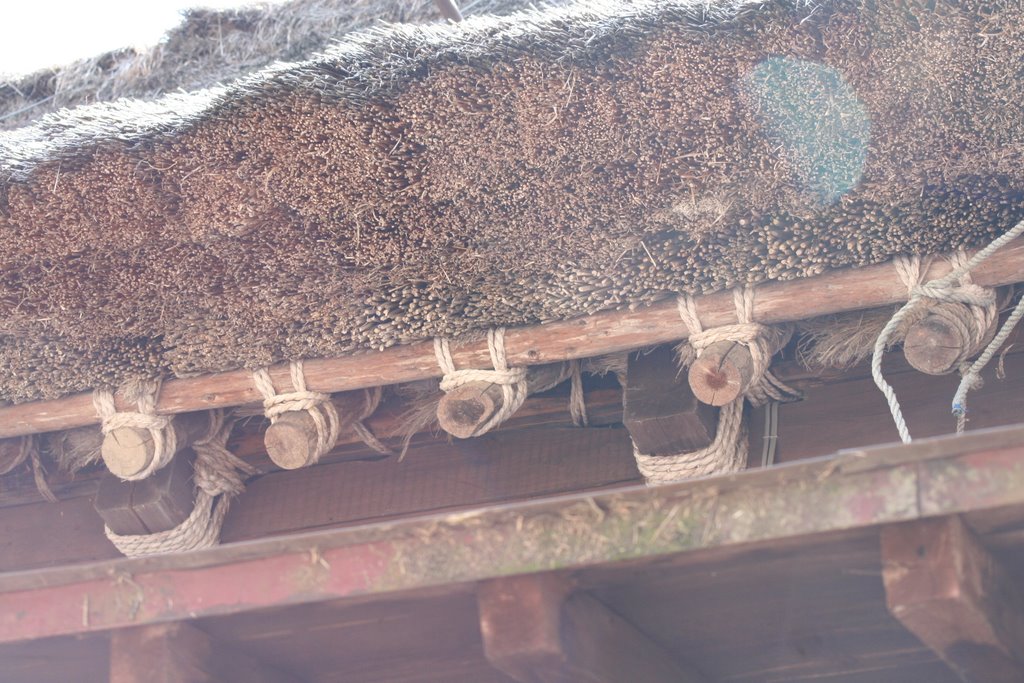
Under the eave of a roof.
August 20, 2006
Making Paper

When we entered the room we were asked if we wanted to make a sheet of paper, a bookmark, or three postcards. We all chose to make different things. Papa followed a woman over to a table and paid for the projects.
Then we were given a small plastic container and were told to choose three leaves that we would use in our projects. I didn't get a picture of this step. I chose to make a sheet of paper. A woman demonstrated the steps as we all watched.
She put a bamboo screen into the paper-making frame or sugeta.
She showed us how to hold the sugeta and how to get the pulp and water mixture into the frame without messing it up. She showed us how to move it around and then how to slosh out the extra mixture. It looked easier than it was. Little Brother later told me that a thin piece of paper means you're good at paper-making. My piece of paper turned out thick!
She took the screen out of the frame and showed us how to carefully lay out the thin layer of paper mixture on the conveyer belt of the press.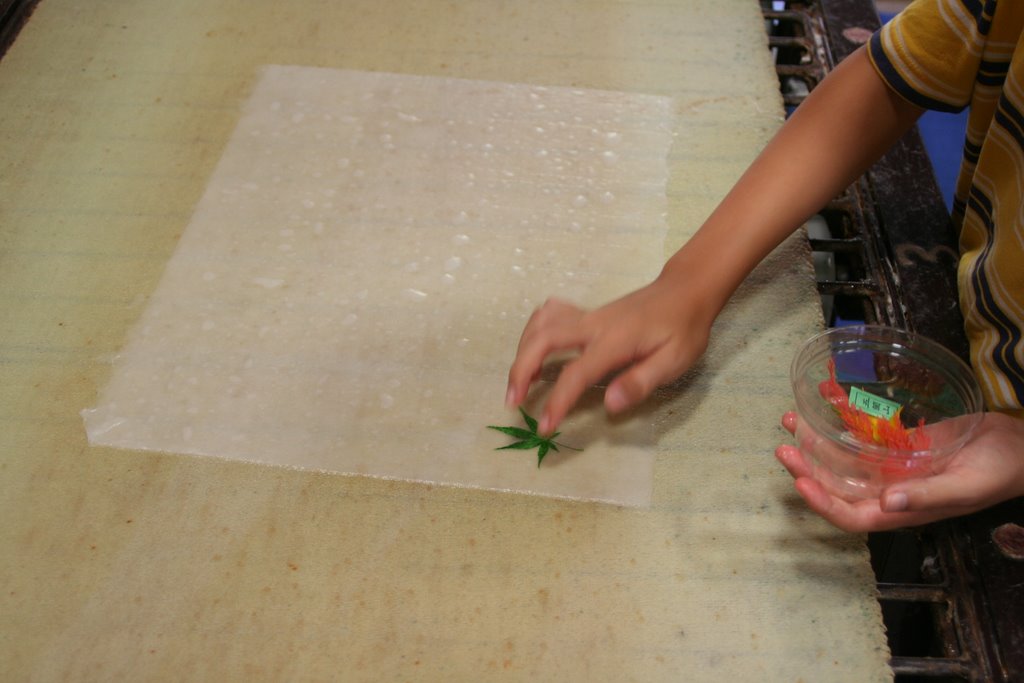
At this stage the dried leaves were put on.
Then it was run through a press to remove excess water and to flatten it.
It was then smoothed out on this table before it was put on the metal dryer.

Since this was a workshop for tourists who couldn't wait for the paper to dry naturally on its own, the paper was put on this metal dryer. Still, it took about 15 minutes to dry.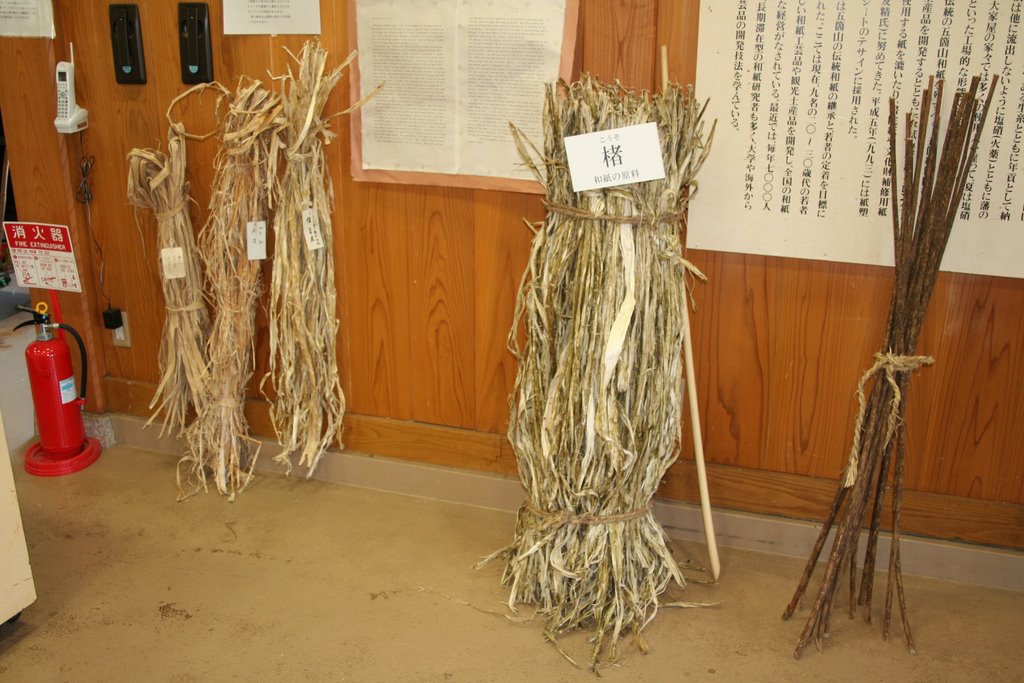
As we were waiting for our projects to dry, I looked around. This bark from the kozo tree is the material that was traditionally used to make paper. It has a stickiness that is useful in making paper. The small limbs on the right would have been stripped like the bundles on the left and then soaked.
Making Postcards

Postcards looked a little easier to make. The shaking and sloshing didn't need to be as carefully done. The postcard frame was dipped in the pulp mixture and moved around a bit to get the pulp evenly distributed. It was held over the vat and drained.
Leaves were placed on each card.
The pulp water was spooned onto the cards.
The frame was taken off the screen. A woman then shaped the cards with a plastic spatula-like tool.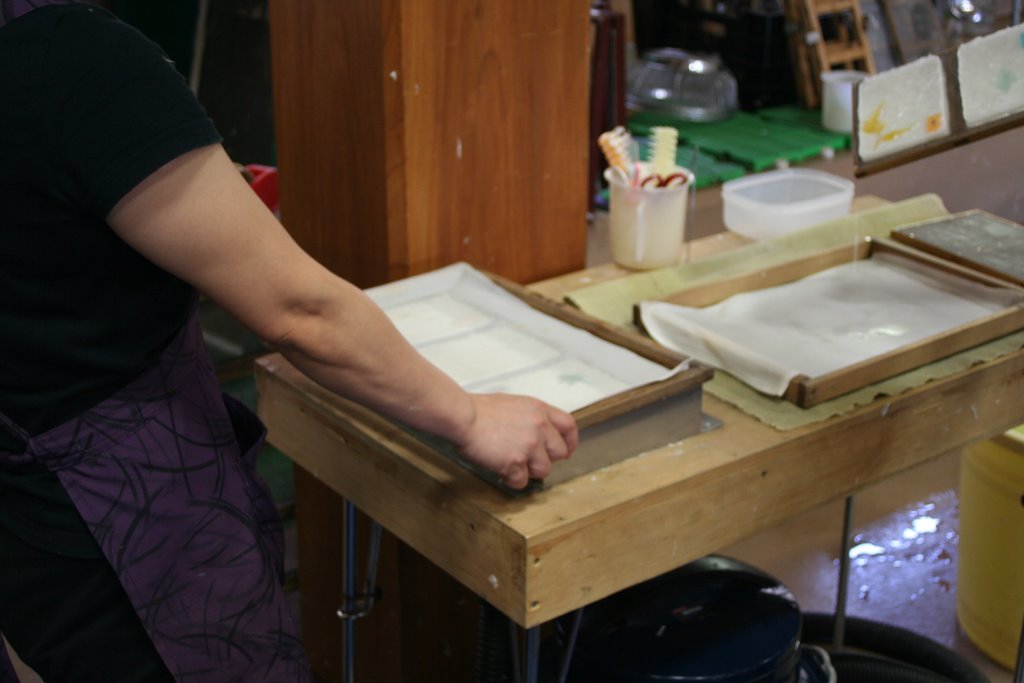
The cards were then run across a dryer. The dryer was a flat metal surface that had a slit along its center. The water was sucked out of the cards.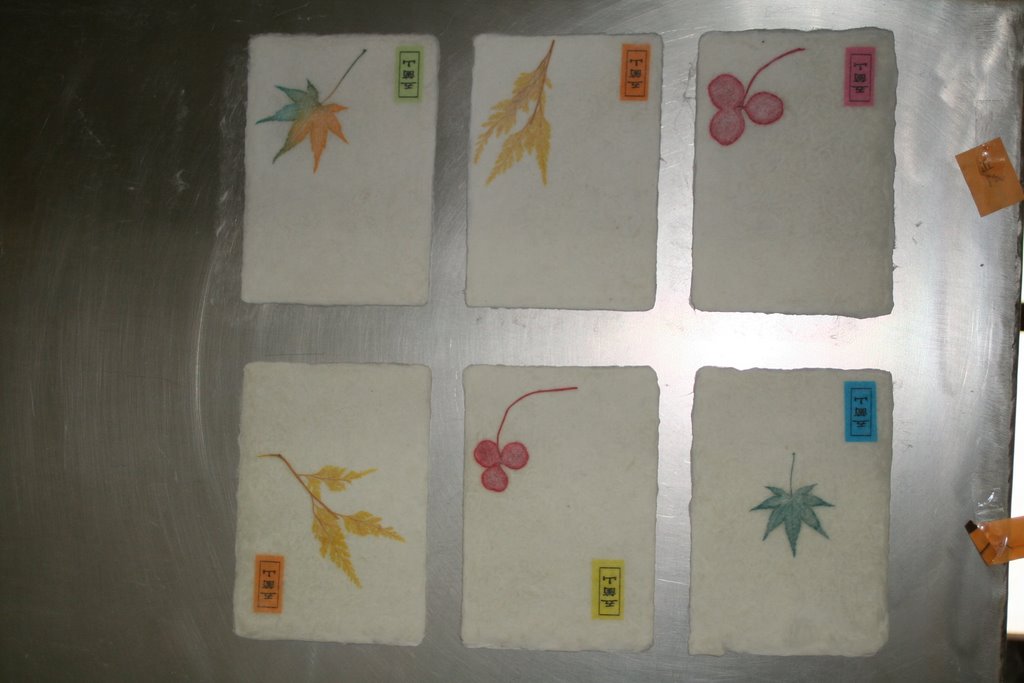
They were then placed on the hot metal dryer. These are the cards Papa and Big Sister made.
August 19, 2006
Japanese Paper Experience House

We stopped in a small town for the paper making experience. It was the first time for Papa and me to have this experience. The children had made a class visit to make paper at a place in Tokyo. (Note the sign. It's amazing how much English there is here, isn't it?)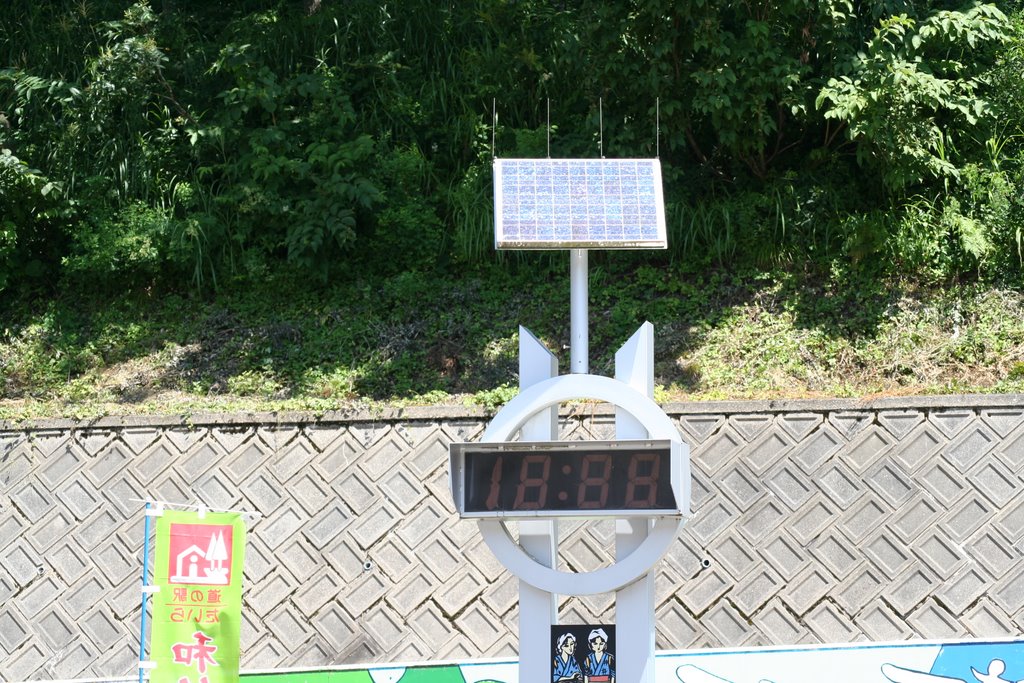
This solar clock was in the parking lot. But at second look, what time is that?
This was a gorgeous handmade paper in the window of the shop. The glare of the glass and the sun makes it hard to see the delicate paper.
We looked through the shop before going to the "Japanese Paper Experience House". Here's some bright handmade paper or washi.
More paper. Some with patterns. In the background, there are items made out of the paper.
These are shelves of items made out of washi. There are small wastepaper baskets or trash bins on the top shelf. Shopping bags and letter boxes are on the second shelf and pencil caddies on the third.
Going Around the Mountains
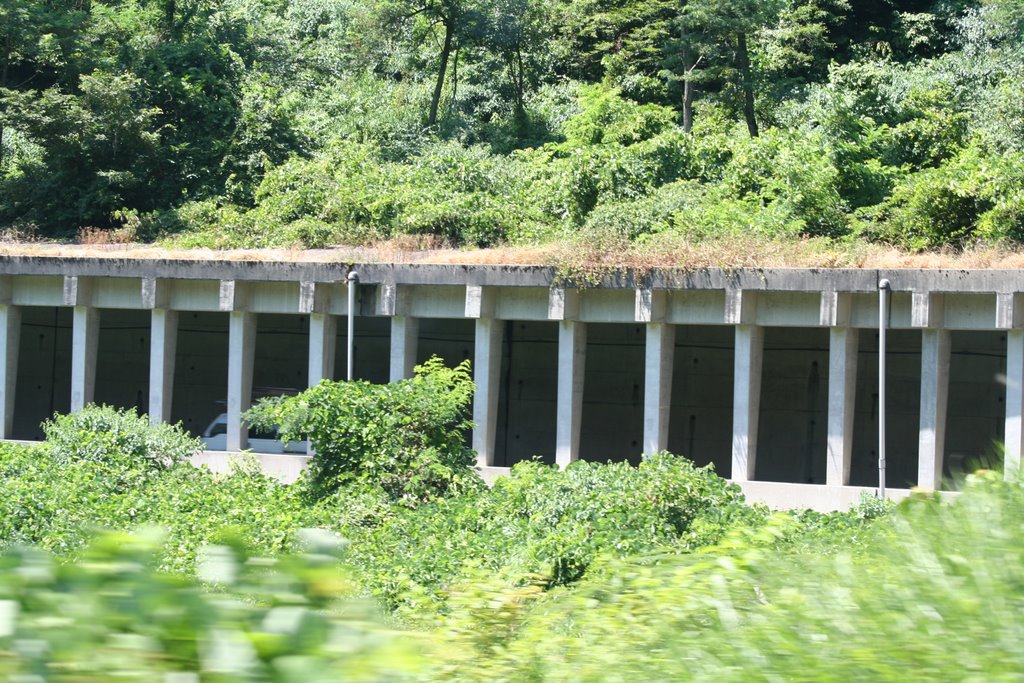
I took this picture as we approached an open tunnel that went along the sides of the mountains. Look closely and you can see a white car making its way through.
There was construction work being done on this one so we had to wait for the green light for our turn.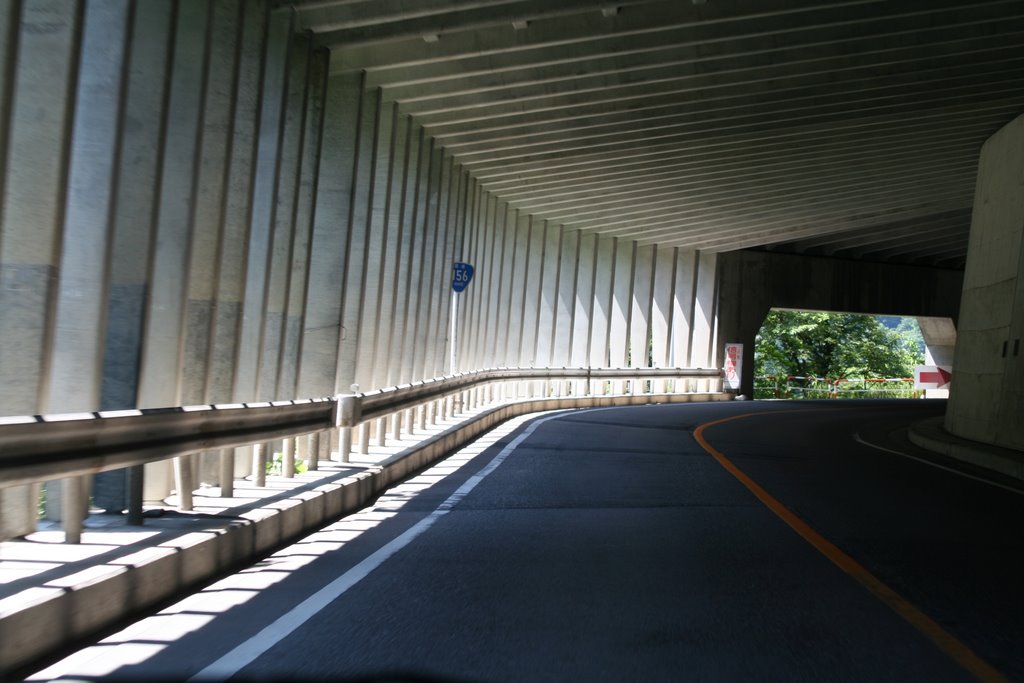
Here is a picture on the inside. There was a lake with very green water down below. It was impossible to get a good picture because of the concrete pillars.
I was able to get a picture of this bridge across the green river water as we were going around a bend. We eventually went across this bridge.
Down the road there were drill bits that were used to make the tunnels. I missed taking a picture of a really big drill bit, but later got a quick picture of this one.
August 18, 2006
Eating and Leaving


I forgot to take a picture of dinner, but I remembered to take the camera to snap these shots of our breakfast. Breakfast was at 8:00. Imagine waking up to this much food! As you can see things are served in separate dishes. Each person gets a serving of the same food on the same kind of dish. Little Brother's egg was cooked for him and served on a blue and white plate with lettuce. Ours was softly boiled and served in a soy and mirin sauce in a square bowl.
The selection of dishes (food and dishware) here is wide and varied. The food is seasonal. Some dishware has seasonal decorations. A green maple or bamboo leaf, morning glory, bellflower, sunflower, dragonfly, or watermelon (Little Brother's idea) are common decorations on dishware. As I look closely I can see that this dishware didn't have any special summer decorations.
As we were leaving our breakfast room, I asked the woman who had served us for a picture. In the picture of the whole breakfast table, you can see a bit of her kimono behind Little Brother and Big Sister. She sat on the floor on her knees and first served us rice (it is already on the table in the pictures) and then made tea for us. Here she is in the hallway about to put away futon in someone else's room. Imagine cleaning up while wearing a kimono! I have worn a kimono. It's not easy to walk in it much less bend!
When we went back to our room, our futon were already put away. Check out time was 10:00 so we had time to get ready to leave.
August 17, 2006
A Japanese Inn Stay

We stayed at this Japanese inn. I was surprised to see a big wooden sign near the entrance with our name listed with the names of the other guests.
These old containers were used to make sake. They were in an outdoor restaurant area outside the entrance of the inn.
A pond seen from the lobby.
This is a washitsu, a room that has tatami or grass mats. This room has nine mats. In Japan, room size is measured in mats. We had a suite of two rooms of tatami, a sitting area near a window, an entrance leading to our toilet's room, and a bath and shower that didn't work.
The inn was an onsen , an inn with a separate hot spring bath for women and for men. Most guests probably go downstairs to use the community showers and then bathe in the hot spring water instead of using the bath and shower in the room.
I have to add that we used to live in a much smaller space than this inn room. For seven years, we lived in an 8 mat room. It was the dining room, living room and bedroom for the four us.
Washitsu usually have a tokonoma or an alcove where decorations are displayed. The scroll is usually seasonal. This one is a summer view of Mt. Fuji. Our beds were in the closet when we arrived. We moved to another washitsu downstairs to have our dinner. Unfortunately, I forgot to take a picture of our dinner!

When we came back from dinner, our beds were made for us. They were all in the same room leaving the other room as a sitting area. The futon had no pads under them, but they were thick and comfortable.


