
Taking care of a rice plant was part of Little Brother's fifth grade homework over the summer vacation, too. After planting it at school (see post for June 15th,) he brought it home on July 12th (see that post). Here is a recent picture of his rice plant. It has produced rice!
Yesterday while I was out and about, I came across two fields with long sheets of black plastic stretched across rows. Round holes were cut in the plastic. In each hole as far as I could see, there were pink pellets strewn. I wondered what the pink things were.
Later Little Brother came in and announced that his class had planted daikon, Japanese radish, in fields near their school. "Yeah, and the seeds are pink!" I was nowhere near the fields he planted, but I got the answer to my question. He said he made a hole with his finger and put three seeds in it and covered them with soil.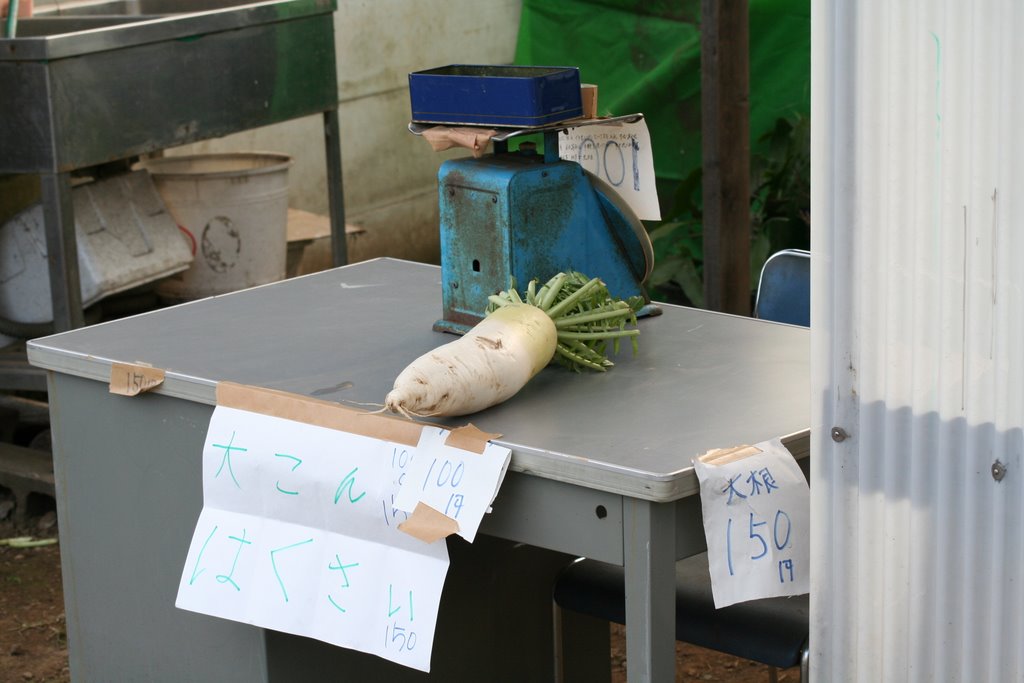
Here is a picture of a daikon. I took it last year. The daikon was sitting on a table to be sold for 150 yen. The price was lowered to 100 yen. There is a blue tin money box on the scale next to it. Whoever wants to buy it will put the coin in the tin box. It is an "On Your Honor" system at this vegetable stand.
September 13, 2006
School Days: Reaping and Sowing

August 23, 2006
World Heritage Site: Gardens and Paddies in Ainokura
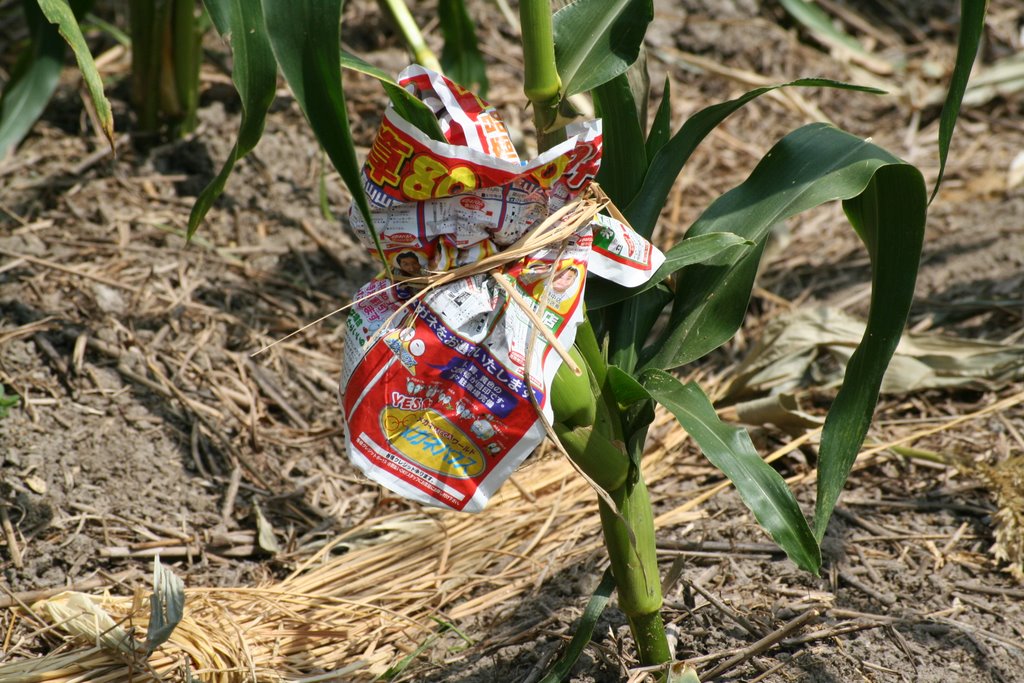
It looked like a gardener wrapped her corn in the funny papers. It was actually pages from a junk mail flyer. Yet another way of recycling.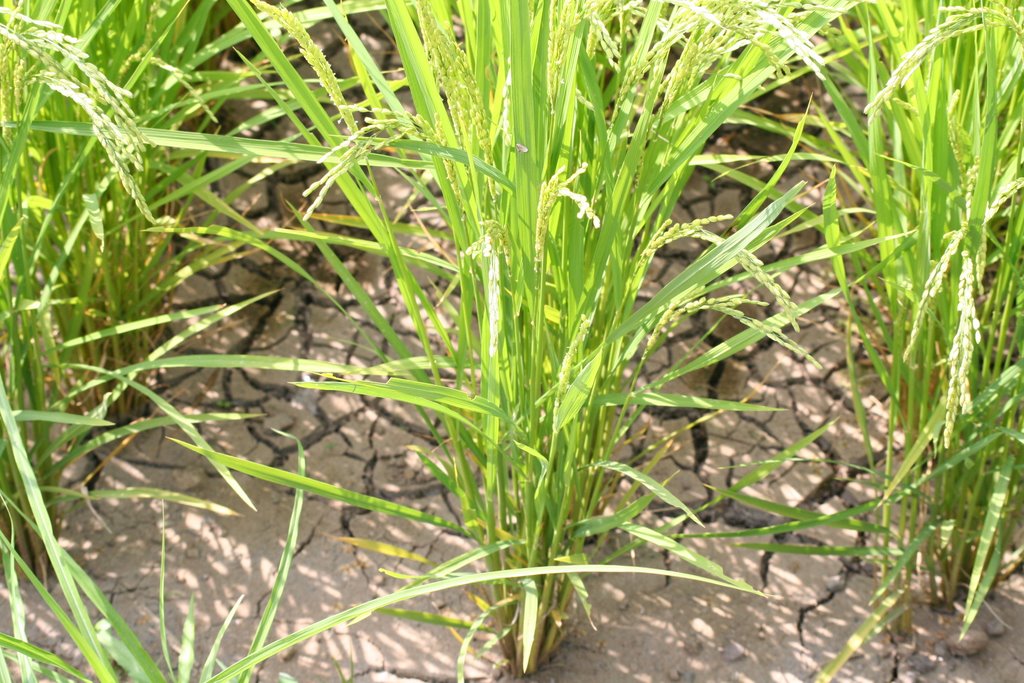
The rice here was mighty dry. It was surprising because it has been a very wet year and farmers in Niigata are worried about their rice crop not having enough sun this year.
More pictures of rice and other crops.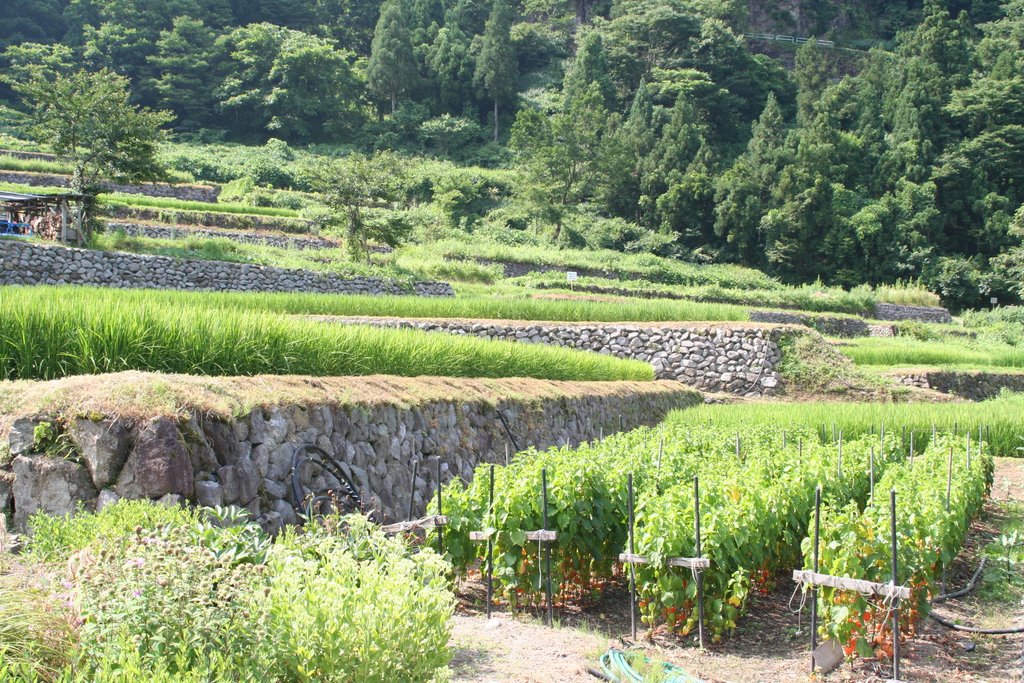
This field of Chinese lanterns was near the entrance of the parking lot. Can you see the orange "lanterns" hanging on the plants?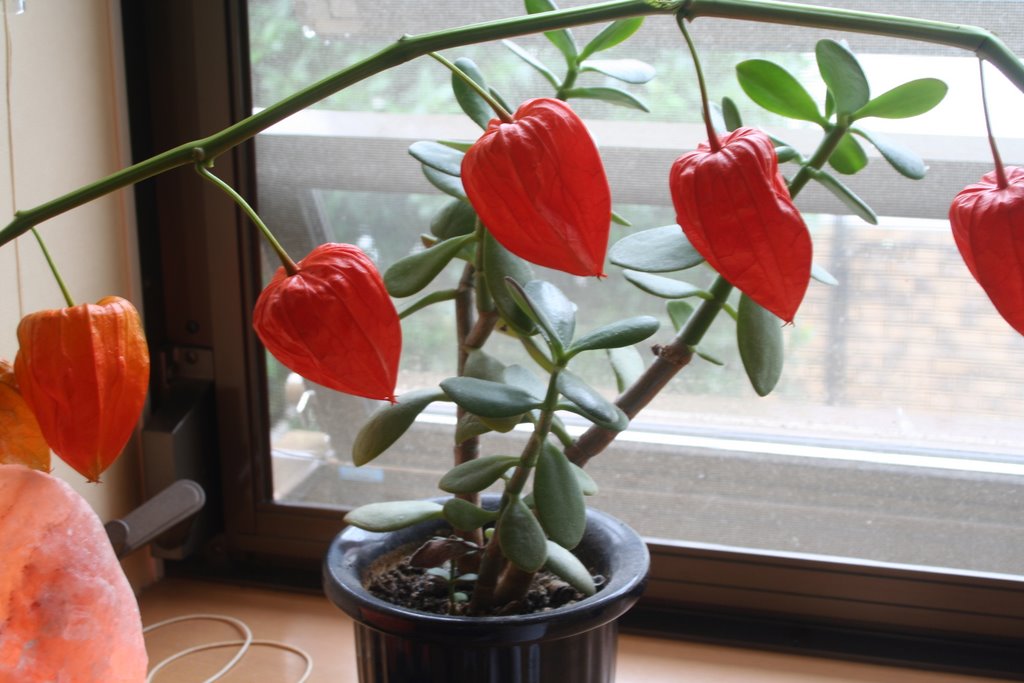
These are some Chinese lanterns that we bought this summer and put on our windowsill. They sell stems of them at flower shops.
August 15, 2006
Around a Small Town in Niigata Prefecture

Niigata Prefecture, a district in northern Japan, is known among other things for its very good rice. There are rice paddies or fields everywhere. The paddies outside town are commercial. The rice is sold all over Japan. There are paddies in town, too. That rice is grown only for the family who farms it to eat. The picture above is rice. At this point in its growing cycle it is bright yellow green. The rice was beautiful on this sunny day, but almost blinding. It was so bright!
This is the irrigation system of one of the paddies. I believe that's grass along the center.
Though we had sunny days for our visit, Japan has received more rain than usual this year. Everyone is concerned about the rice and other crops. It seemed every house here had a rice paddy or a garden or even both. This gardener is protecting her tomatoes from rain. The umbrellas are clear plastic so the tomato plants can still get the sun when its out. In April, I posted about a gardener in Tokyo who put an umbrella over her azaleas.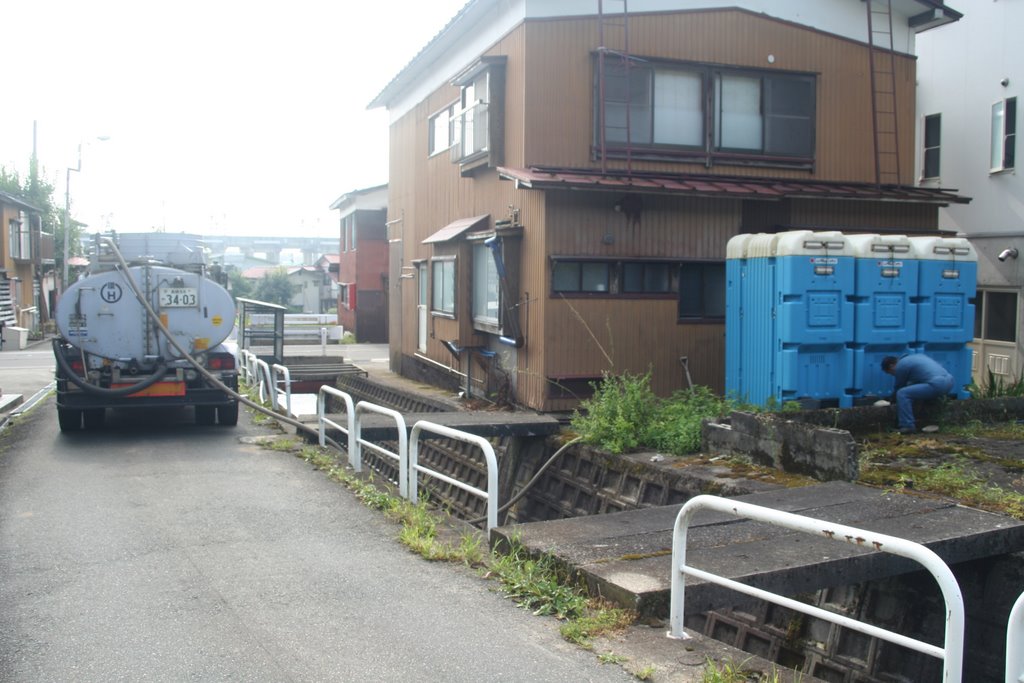
Walking around town we came across this scene. After the big earthquake in the area two years ago, this family put portable toilets behind their house. Can you see the man in front of the toilets emptying them with a hose attached to the truck? Having portable toilets in your back garden is not common. At one time, however, non-flush toilets were common in Japan. Someone would come along with a wagon to empty them. Nowadays, there are houses with non-flush toilets and trucks like this one come by to empty them. Let's just say that even though the process has surely improved over the centuries, it's not a pleasant job.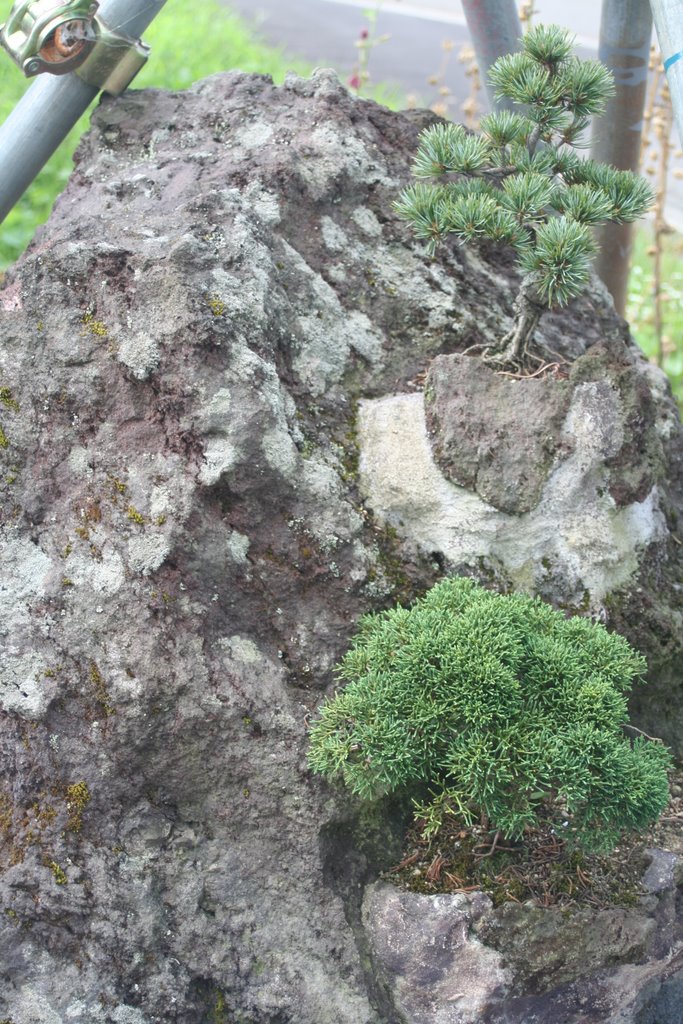
This rock was behind another house down the street from the toilets. This gardener planted bonsai or miniature trees on it. It was impressive how these trees could grow on a rock.
July 12, 2006
Big Job and a Big Haul
A workman came today to put wooden molding around the shower door in the laundry room. We had a leak so the door was replaced last week. They had to take off the molding and had to order more.
Here is his work truck. He pulls the green tarp over the back of the truck and ties it down before he drives.
Here are some of the tools he used. Can you see the wooden handles on some of the tools? I'll show you great-grandfather's tools someday. He was a contractor.
The workman cut the molding in the garden and brought it upstairs. I was stuck in the kitchen with the dogs. They were quiet as long as I was with them. When he finished upstairs, I went down and took pictures. As I was taking pictures, he was replacing the ceiling in Baba's kitchen because of the leak, too. It was a big job. There was no room to take pictures in there! Jiji, grandfather, had never liked the idea of putting a bath on the second floor. He was worried about plumbing problems. Luckily, it wasn't the pipes! 
My son carried home the rice he had planted at school. Bless his heart! He hauled it all the way home along with his water bottle and calligraphy bag not to mention the heavy randoseru, school bag, on his back! He said it was really heavy. His hands were red and he was dripping with sweat. After drinking a big glass of water, he said he has to keep it watered. He has to keep the birds away, too. School will be out next week so little by little he'll bring things home. He had a pretty big haul today. (See the June 13th post to find out how he chose the rice seed to plant.)
June 13, 2006
School Days: Finding Floating Seeds


Remember Little Brother had to take a bucket to school a week or so ago? Yesterday, he came home with this package of rice seeds or seed rice. Part of his homework last night besides reading, writing, and arithmetic was to find the seeds that float and the ones that sink. He was given no written instructions. He was told the measurements to use and basically what to do.
This is what he did:
Measured 100 cc of water into a cup.
Added 13 grams of salt. Stirred to dissolve the salt.
Poured the seeds into the cup of water.
Spooned out the seeds that floated. Discarded them.
Spooned out the ones that sank and rinsed them.
Washed out a used plastic fruit container. (Note the American cherry container.)
Placed the rinsed seeds in the container with a little cold water.
Placed the cover on the container and put it on the windowsill.
He has to change the water everyday. He will watch and wait to see them sprout and then he will take them back to school to plant in his bucket.


