
Most public toilets flush on their own when you leave the stall. Some can be flushed by moving your hand over a sensor like this.


Tomorrow is Grandparents' Day in the States. Japan has its Day of Appreciation for the Elderly on the 18th of this month. Not all grandparents are elderly. Here are some things that would make life easier for those who are.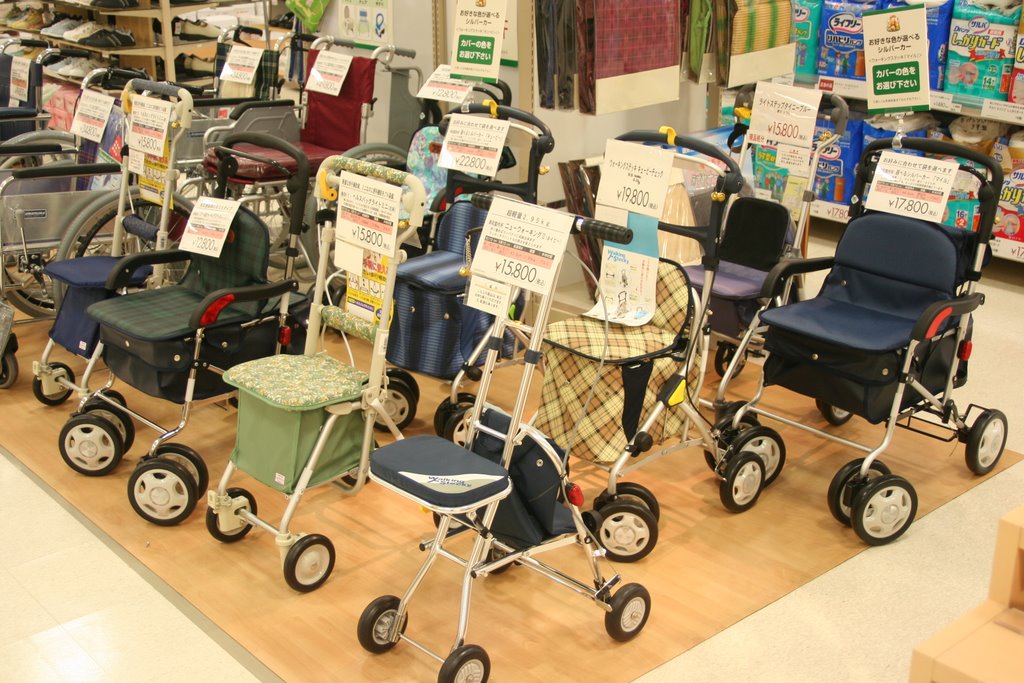

These are shopping carts that have seats. The wheels lock so Baba (Granny) won't roll down the street as she sits down. Most people ride bikes or drive cars and carry groceries home that way. Some of us walk everywhere we go. Older people use these carts. I use a cart when I shop. A neighbor laughed and called me "Granny" when I first used my cart. It doesn't look like these, though. These carts are for people much older than I am. I have seen really, really old people do their own shopping with these.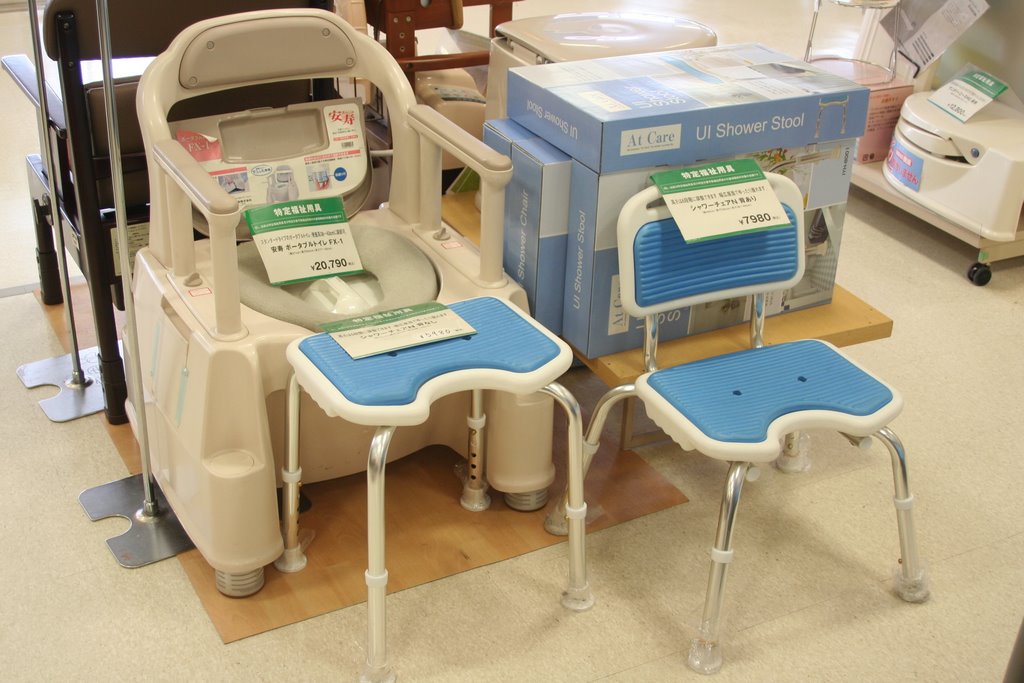
You've probably seen these. One is a shower stool and one is a shower chair. There is also a toilet in this picture. There are other toilets in the picture below. Most of these would have to be emptied. The one on the left fits over a regular toilet.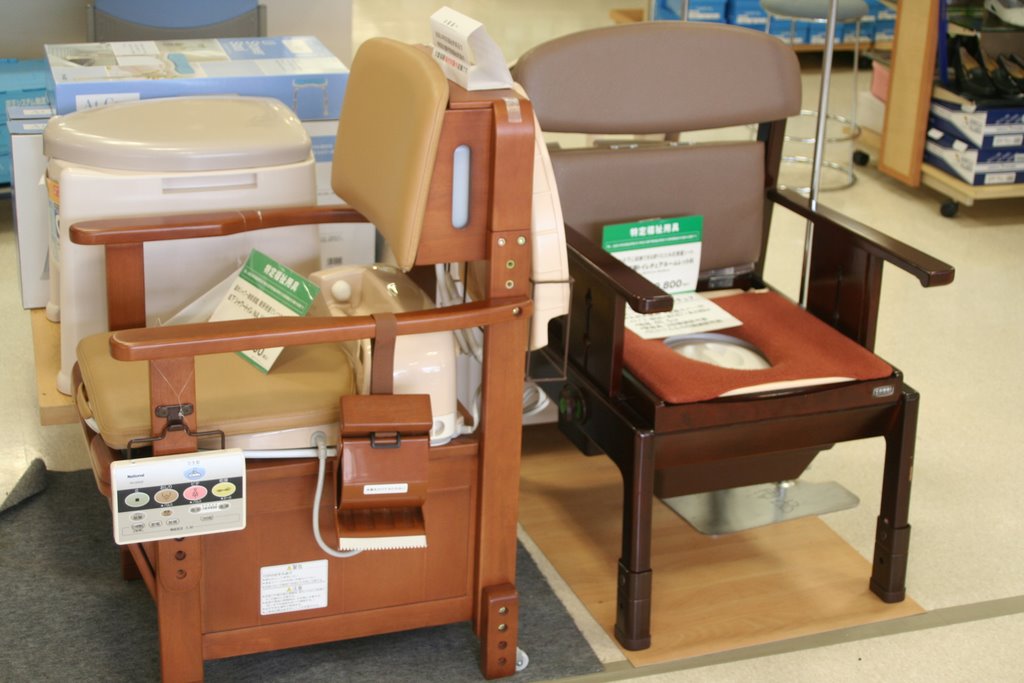
P.S. You may want to look at the post for July 4th, 2006. Tokyo Gas visited Little Brother's school. They held a workshop to show the students what it's like to be old. Do a search of my blog and look up "School Days: Visit from Tokyo Gas".

Niigata Prefecture, a district in northern Japan, is known among other things for its very good rice. There are rice paddies or fields everywhere. The paddies outside town are commercial. The rice is sold all over Japan. There are paddies in town, too. That rice is grown only for the family who farms it to eat. The picture above is rice. At this point in its growing cycle it is bright yellow green. The rice was beautiful on this sunny day, but almost blinding. It was so bright!
This is the irrigation system of one of the paddies. I believe that's grass along the center.
Though we had sunny days for our visit, Japan has received more rain than usual this year. Everyone is concerned about the rice and other crops. It seemed every house here had a rice paddy or a garden or even both. This gardener is protecting her tomatoes from rain. The umbrellas are clear plastic so the tomato plants can still get the sun when its out. In April, I posted about a gardener in Tokyo who put an umbrella over her azaleas.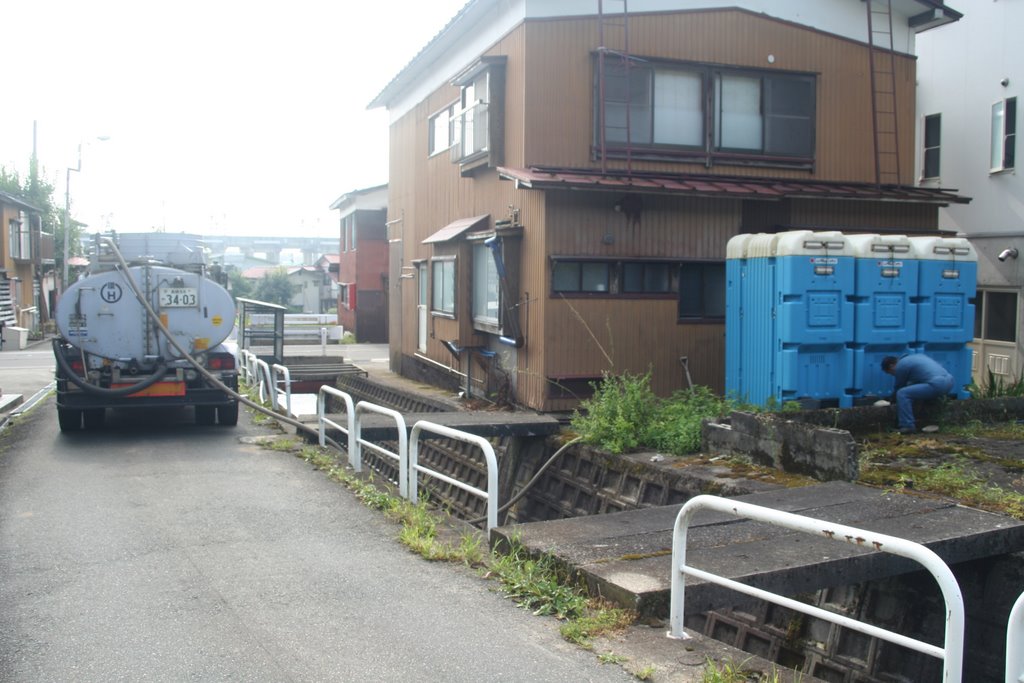
Walking around town we came across this scene. After the big earthquake in the area two years ago, this family put portable toilets behind their house. Can you see the man in front of the toilets emptying them with a hose attached to the truck? Having portable toilets in your back garden is not common. At one time, however, non-flush toilets were common in Japan. Someone would come along with a wagon to empty them. Nowadays, there are houses with non-flush toilets and trucks like this one come by to empty them. Let's just say that even though the process has surely improved over the centuries, it's not a pleasant job.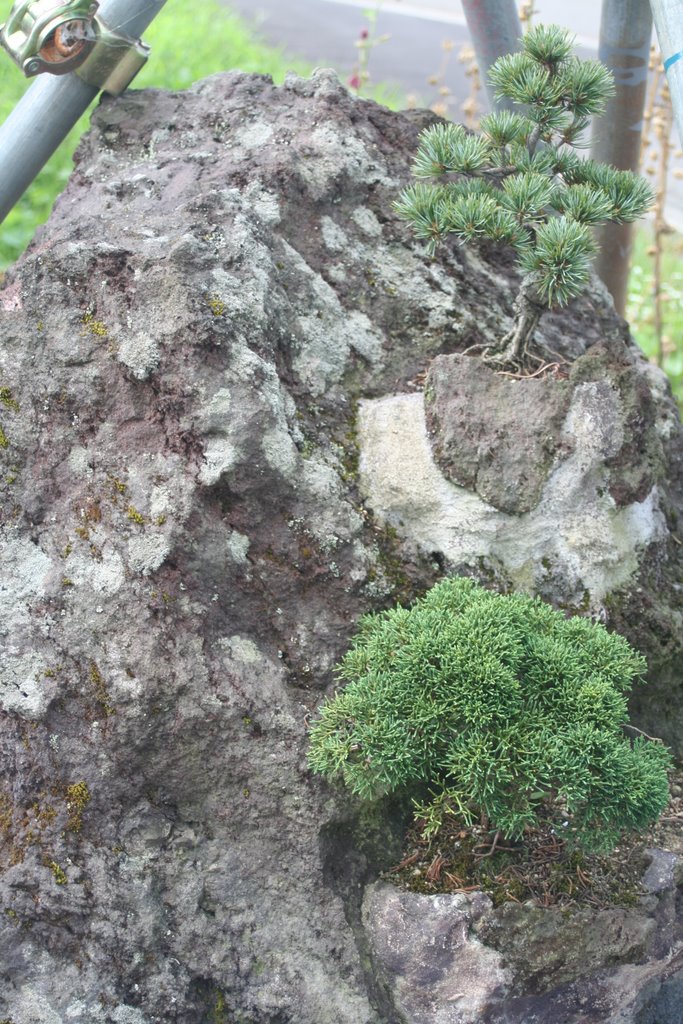
This rock was behind another house down the street from the toilets. This gardener planted bonsai or miniature trees on it. It was impressive how these trees could grow on a rock.
You may cringe at using the word "toilet". I know I did before coming to Asia. Students and speakers of English here and in Asia used the word "toilet" instead of "restroom" or "bathroom".
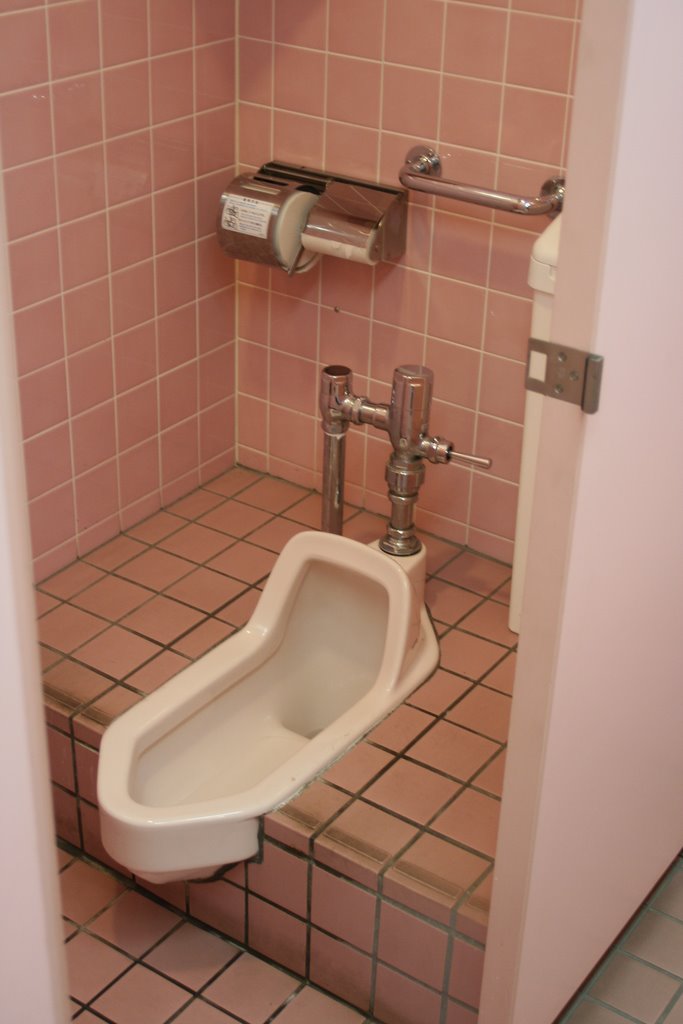
This is a public Japanese-style toilet. If you're visiting Japan, don't worry, there is usually a choice of toilets in a public restroom. The door of the stall may say "Western" in English and Japanese. I have even seen signs on stalls written in Japanese and English saying "Japanese" meaning Japanese-style. Some people prefer the old style.
The stalls may not have signs, so take a look in each stall unless you're standing in line to use the toilet. I've actually had people wave me into a western toilet thinking that I would prefer it. Sometimes there is not a choice. Parks usually only have Japanese-style toilets. I remember seeing on TV that it is faster and easier to clean a Japanese-style toilet.
Many, many years ago I saw a sign in a downtown restroom with instructions on how to use this kind of toilet. The main thing is that you have to squat or bend down over it. And because it is so low, you have to balance yourself while trying to keep dry. I would suggest flushing with your foot after standing. Sorry to be so indelicate, but it's worth pointing out.
I don't have the official word on how to flush (hand or foot). The instructions on that sign didn't get that far. I started thinking about it when my children were learning how to use the toilet and were too small to hang onto the rail. (They wanted to hang onto the handle.) I took a poll among my friends and no one seemed to know or want to tell what they thought was the proper way to flush. Perhaps the idea of flushing in public with your foot and with your hand in private homes is good advice anywhere. This may be more than most of you want to know about toilets and their use here, but I heard several of you are coming to Japan soon. Nowadays, you can visit Japan without ever having to use one of these toilets so don't lose any time worrying about it! Oh, yes, I'm not going to get in the habit of teaching Japanese words but you may want to know the polite word for "restroom" is otearai. O is pronounced "oh" te rhymes with "day" a is pronounced "ah" like in "mama" and rai rhymes with "rye". Oh-tay-ah-rye. The "r" sound in Japanese is somewhere between "r" and "l".
Note: This picture was taken at my local hardware store. It is quite an old restroom. There were two Japanese-style toilets and three western toilets, though.
For years, my two children, Papa and I ate, slept, and lived in one tatami (grass mat) room. Our toilet, however, had its own room. Most if not all home toilets have their own room in Japanese houses. It is usually next to the bathroom which may also be the laundry room.
A pair of toilet slippers (usually plastic) lay on the floor inside the toilet's room. As you may know, street shoes are left at the front door and house slippers are put on. Going to the toilet, you leave the house slippers outside the door of the toilet and slip into the toilet slippers. "That's manners," as Papa says. And under his advisement, a toilet brush is also provided as a courtesy to guests.
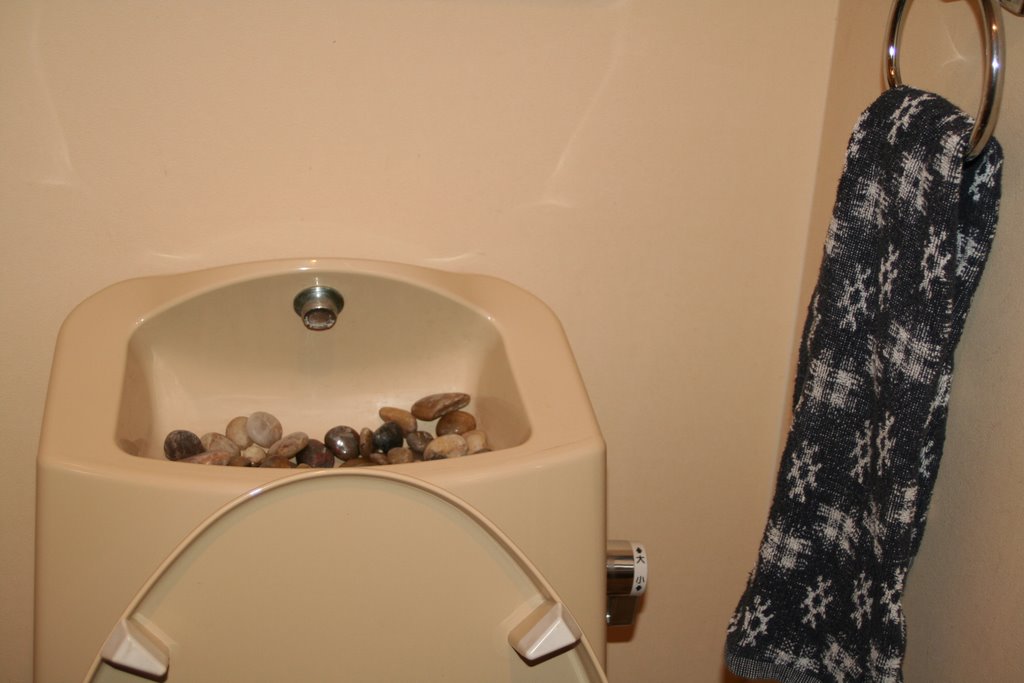
Here is a picture of the top of our toilet. There is a water spout that pours clean water into a little sink after you flush. You can wash your hands here and then use the towel hanging next to it. I put pebbles in ours for decoration. People usually leave it empty or put a deodorant decanter or colorful plastic pieces in it. If the toilet does not have its own sink, guests use the sink in the laundry room. Most of our guests prefer to do that anyway.
 Listed here in For Kids- Japan

 HTJ is listed here.


