December 23, 2011
Yuzu Treats
This freeze-dried yuzu tea has been available all month. Just add hot water. The steamed cake has pieces of sweetened dried yuzu peel on top. I don't have them together, but I could. The tea is sweeter than the cake.
I make my own yuzu tea from scratch, too.
Posted by
Annie Donwerth Chikamatsu
at
6:41 AM
0
comments
Labels: yuzu
December 22, 2011
This Year's Yuzu Options for the Winter Solstice
Three yuzu fruit are placed in the bath on the winter solstice. The cloth bag of yuzu and the packaged bag of yuzu peel is from Tokyu department store. It was sold in the vegetable section of their basement food department.
The net bag of yuzu is from our neighborhood grocery store. It was sold in the fruit section along with the paper of explanation. Kabocha or Japanese pumpkin is eaten on the winter solstice.
Here are the displays at Tokyu Department Store:
Yuzu bath products. Sorry, fuzzy photo.
Shishiyuzu
Yuzu in cloth bags for the bath.
Cut kabocha. I have never seen it sold like this. I like it! Kabocha is very hard to cut. Kabocha is rock hard!
Sample of a recipe with kabocha and adzuki beans.
Click on the labels below for more posts. Especially yuzu.
Posted by
Annie Donwerth Chikamatsu
at
5:52 PM
2
comments
Labels: equinox, Japanese pumpkin, kabocha, winter equinox, wintersolstice, yuzu
December 21, 2010
Winter Solstice & Eclipse
We were supposed to be able to see the eclipse here in the evening. It was cloudy and rainy where we live, so there was no moon viewing for us. It was the winter solstice and we did what we usually do.
Check this post and this one to see what we do on the winter solstice.
Click on the label below for posts about yuzu.
Posted by
Annie Donwerth Chikamatsu
at
10:30 AM
0
comments
Labels: equinox, winter equinox, winter solstice, yuzu
December 22, 2009
Winter Solstice
We float yuzu in the bath on the winter solstice. This year we're drinking it in our green tea, too. It is from Lupicia. Tea can be ordered in the United States here. The labels on the cans are different. Check the label below for other posts about yuzu.
Posted by
Annie Donwerth Chikamatsu
at
11:18 PM
0
comments
Labels: December in Japan, yuzu
February 01, 2009
Posted by
Annie Donwerth Chikamatsu
at
4:05 PM
0
comments
December 21, 2008
Yuzu for the Winter Solstice
This tree is in our neighborhood. It is next to a motorcycle shop. I took this picture earlier in the month. I'll try to go tomorrow to see if anyone picked the fruit.
This is the biggest yuzu tree I have ever seen. I usually see them in clay or plastic pots.
P.S. On the 24th, some of the yuzu had been picked, but there were still a lot on the tree.
Posted by
Annie Donwerth Chikamatsu
at
7:20 PM
0
comments
Labels: yuzu
November 05, 2008
April 08, 2007
Perennial
Easter is celebrated only by Christians here in Japan. There are no Easter products in stores here. We used to dye eggs and take them to our little friends in the neighborhood. Now that Big Sister and Little Brother and all their friends in the neighborhood are older, we just dye eggs for our family. Big Sister and Little Brother (and friends if they're around) still hide plastic eggs in the garden. It's still fun.
Here are some old friends that show up in our garden every year. They are called perennials. The picture above is bleeding hearts. They come up from a tuber every year. Click to enlarge.
Forget-me-nots or Mary's Eyes. These aren't really perennials, I guess, but they reseed themselves every year. I plant them every year.
Geraniums. Our plants are several years old. This is a new blossom. They have a long blooming season every year.
Anemones. These die back, then come up, and bloom every year.
Carolina jasmine blooms every year. Our potted plant is over six years old.
St John's Wort is planted in the garden. It is just a stick in the winter, but then leafs out and blooms.
Lavendar in a pot. This plant is older than Little Brother! It's around 13 years old. It stays green in the winter.
Freesia is planted with the yuzu tree. It comes up and blooms every spring. The yuzu tree doesn't look very good. The caterpillars ate it up last summer. It's still a stick.
Wisteria is just starting to leaf out. There are a few blooms for the first time in years!
Violets. There is a row of violets planted near this pot of clover and bamboo. Seeds blew into this pot, so now there are violets in the pot, too.
Laurel. Actually, this is the first time this has bloomed. It wasn't pruned last fall, so maybe it blooms on old wood.
Peach blossom. This is not sakura.
Posted by
Annie Donwerth Chikamatsu
at
8:55 PM
0
comments
December 22, 2006
Yuzu in the Bath
For the winter solstice, yuzu is put in the bath. You just take them out of the mesh bag, wash them, and toss them in. The whole yuzu float around as you take a bath. Yuzu is very fragrant. No squeezing or peeling is necessary.
It is sold at the grocery store in the fruit and vegetable section. I found this net of yuzu and a paper of explanation at our grocery store. It is the first time I have seen a paper like this. It mentions that yuzu was believed to get rid of bad energy. Yuzu is supposed to be good for the skin, too. The paper also mentions eating kobocha on this day, too. We eat it throughout the year, but it is a custom to eat it on the winter solstice. I'll post about kobocha later.
By the way, I put a mikan in the picture to show you the size of the yuzu. They are both smaller than an orange.
June 14, 2006
On Our Yuzu Tree

We have a yuzu tree in a pot in the garden. It has been in the same spot for many years. Yuzu is a citrus fruit. Here in Japan, people put the whole fruit in the bath at the winter solstice. Imagine taking a bath with fruit floating in it! The zest or peel of yuzu is also used in winter broth and the oil is used in bath products.
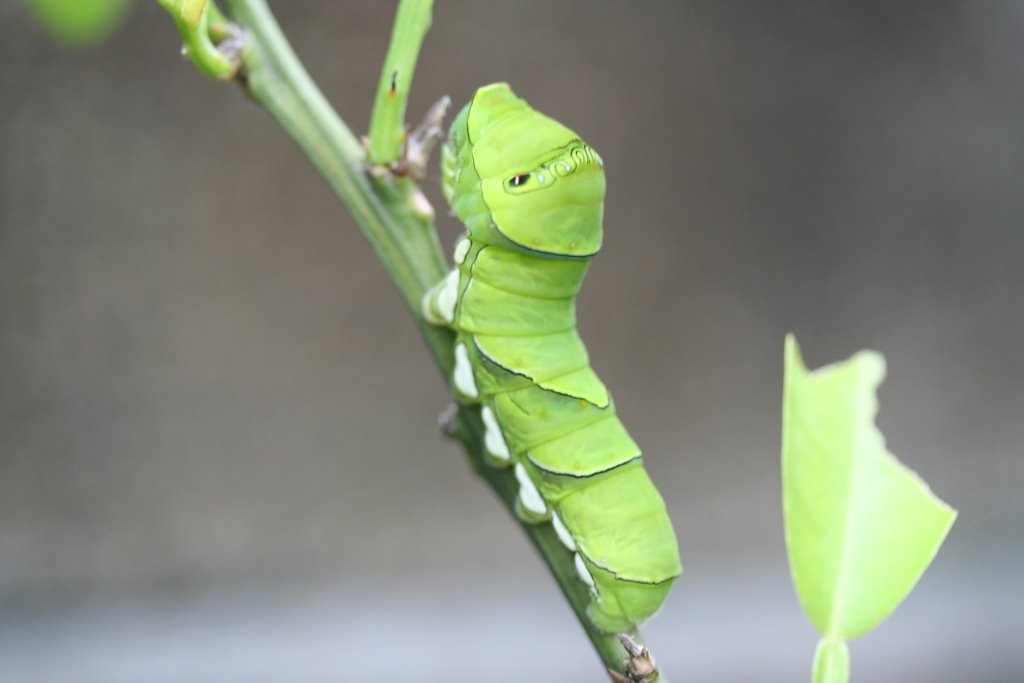
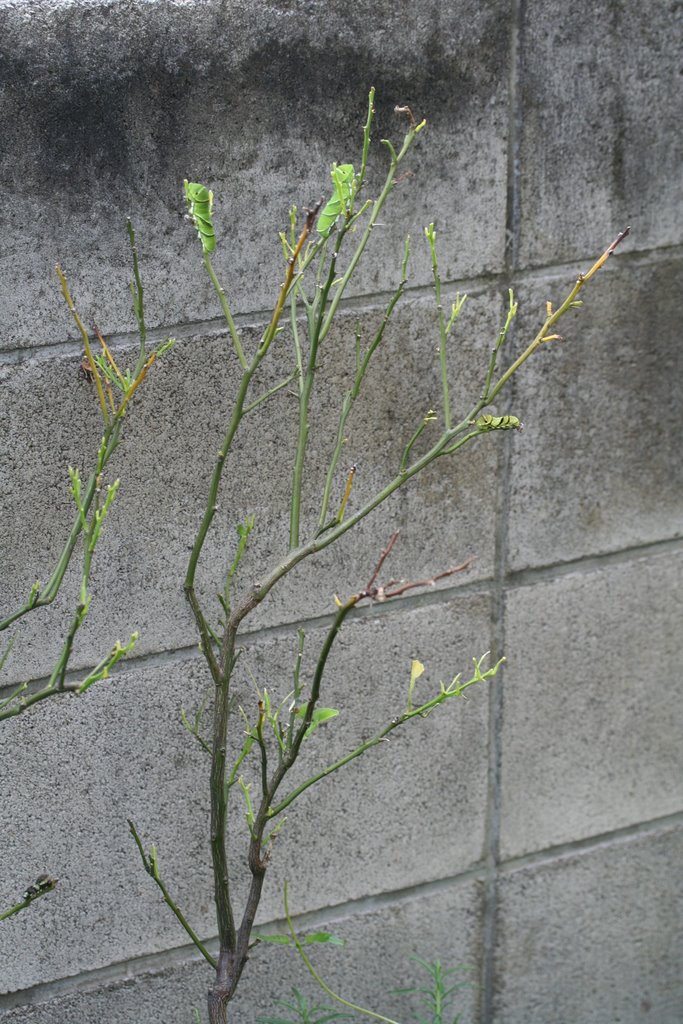
Usually, caterpillars eat all of the leaves and all of the blossoms on our tree. Last year, however, our tree produced several yuzu. They were small and hard, but we were able to use them in the bath. This year the tree is covered with these caterpillars again.
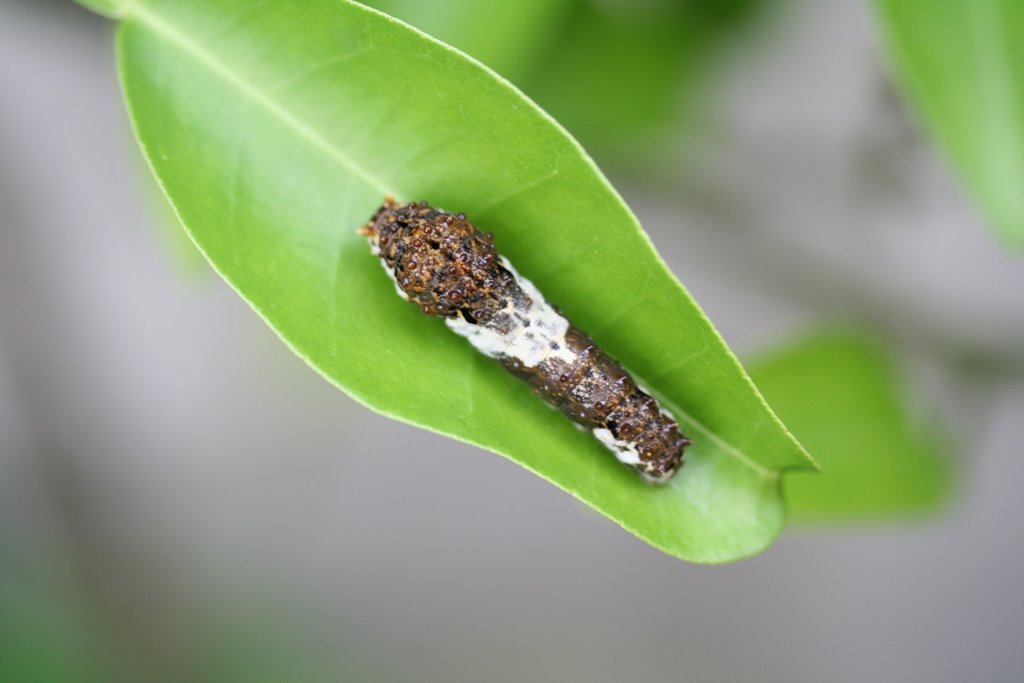
These are not pictures of the same caterpillar. They are different caterpillars at different stages. I don't have pictures of the caterpillars' beginning stages. Here it is when it is brown and crusty.
Then a big smooth caterpillar breaks out. I watched this one break out, turn around and start eating the brown coat.
I searched on the internet and I think they will be swallowtail butterflies. At least I hope so. A few years ago, we took a caterpillar that was devouring our gardenia bush and put it inside. I thought I could save the remaining leaves on my gardenia bush by offering it something else, but the caterpillar would only eat gardenia leaves. We fed it and watched over it. Finally a big ferocious-looking bug burst out. We chased it out of the house. Who knows it could have bitten someone. We're still not sure what it was. We'll leave these caterpillars where they are. We'll keep an eye on them to see what they morph into. I hope it's something we'll all enjoy because look what they've done to our yuzu tree!
P.S. They were swallowtails!
Posted by
Annie Donwerth Chikamatsu
at
12:01 PM
0
comments
Labels: caterpillars, garden, June in Japan, trees, yuzu