


 I've posted pictures of taro. These are yatsugashira. Their stems are red and their leaves are different.
 I have waited to get a picture of them during harvest. Here they are as they are harvested. They are dug up. The stalks are cut. The taro is then placed in a tub and made ready for sale.
 Here they are at a vegetable stand. These are rather clean. I have seen them in plastic bags in stores with dirt still on them. I will try to get a picture of them cooked and prepared to eat. They are not our favorite. They are sticky and slimy. We rarely eat them, but Baba and Aunt do. They share.
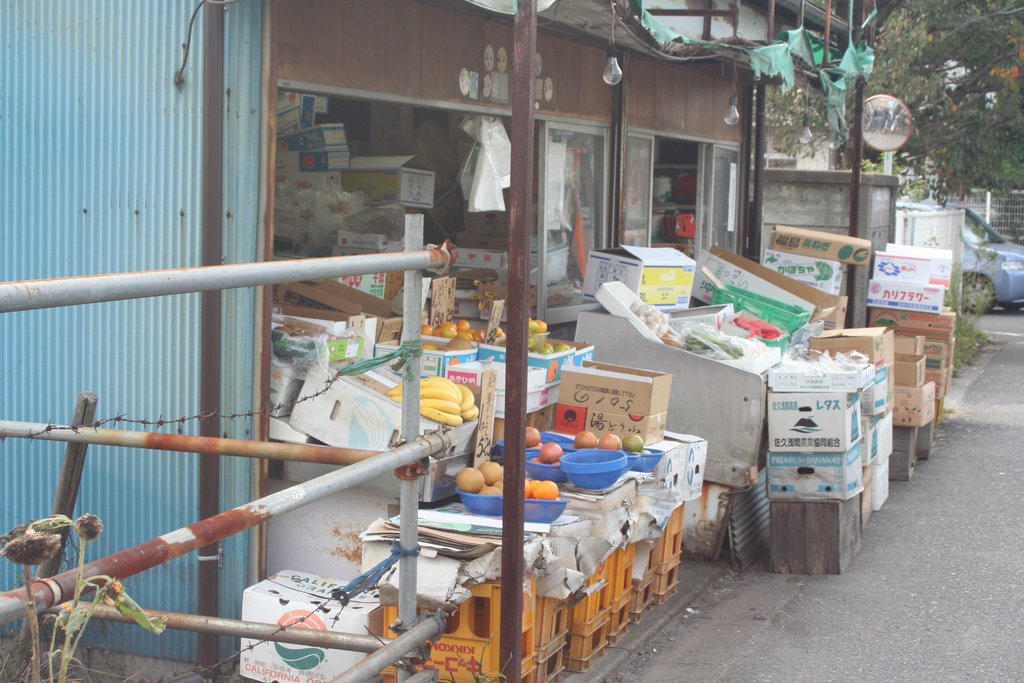 This is the vegetable stand where I found the box of clean taro. It is near a small station.
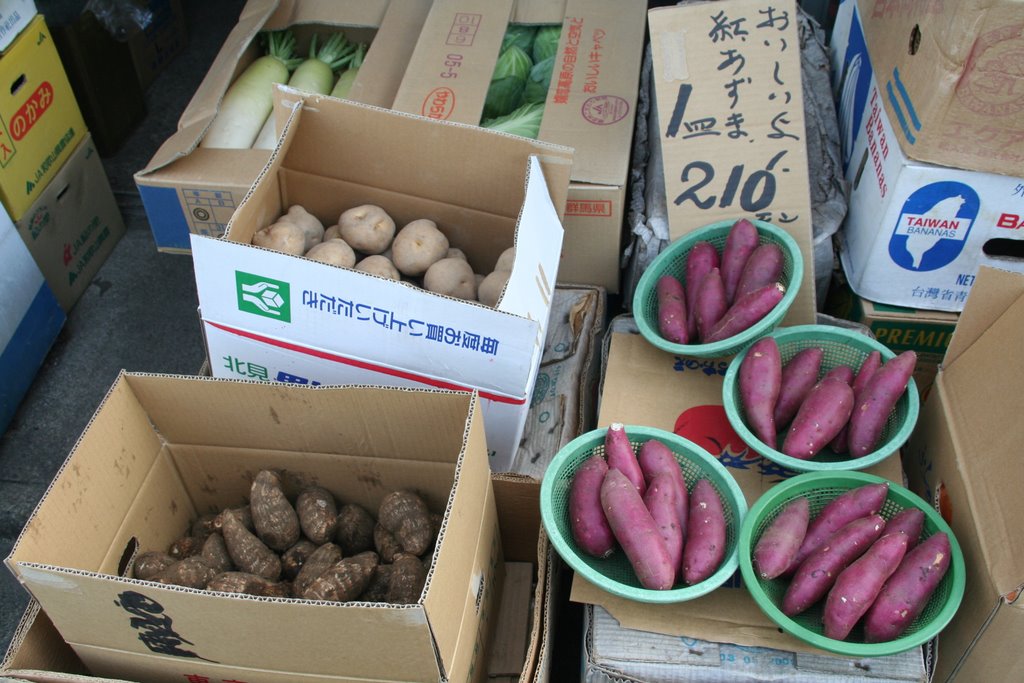 Here is the box of taro along with other vegetables and potatoes. Do you see the box of big Japanese radishes or daikon?
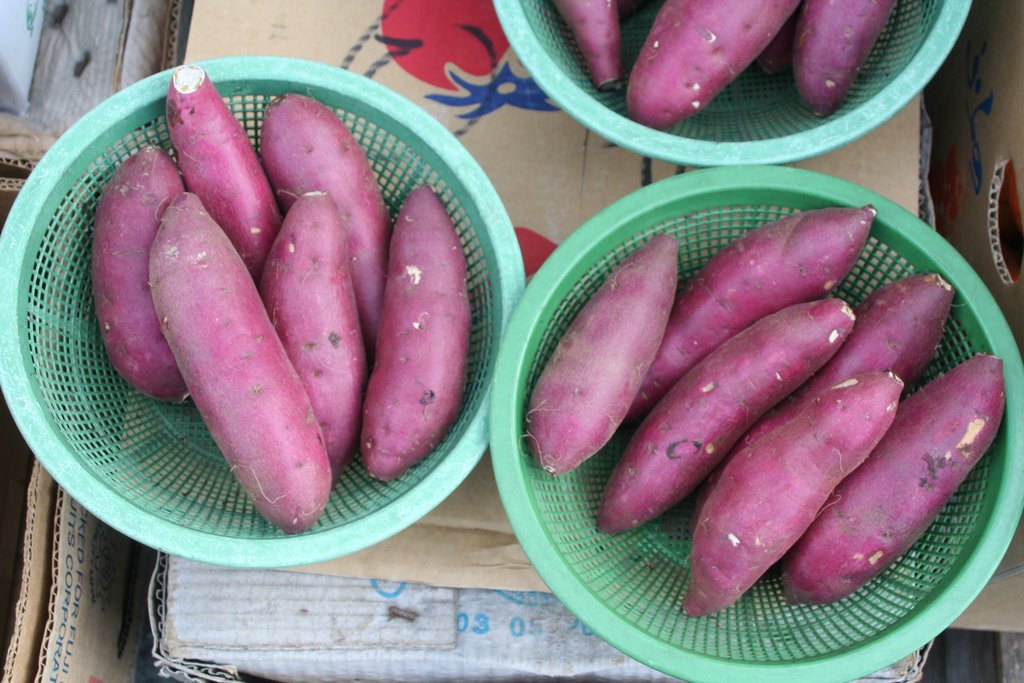 These are satsumaimo or sweet potatoes. They are not orange inside like American sweet potatoes. We eat a lot of these through the winter. I will show you later.
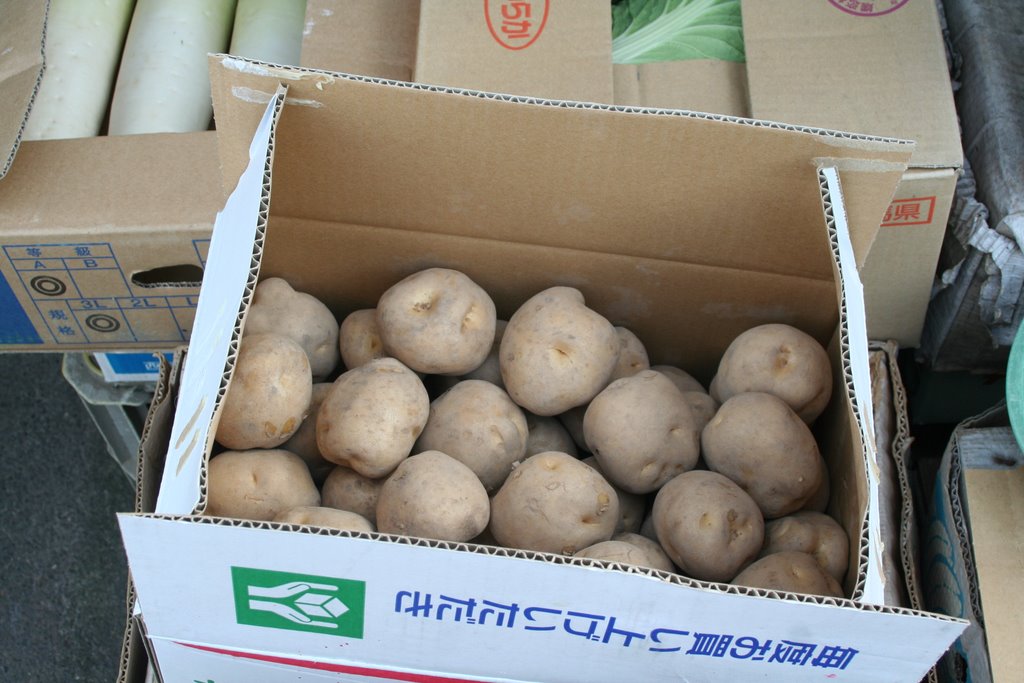 These are regular potatoes or jagaimo. They are smaller and have thinner skins than Idaho potatoes.
Today is the Fall Equinox. Some chestnuts have already been harvested from the trees down the street.
There are still many on the trees.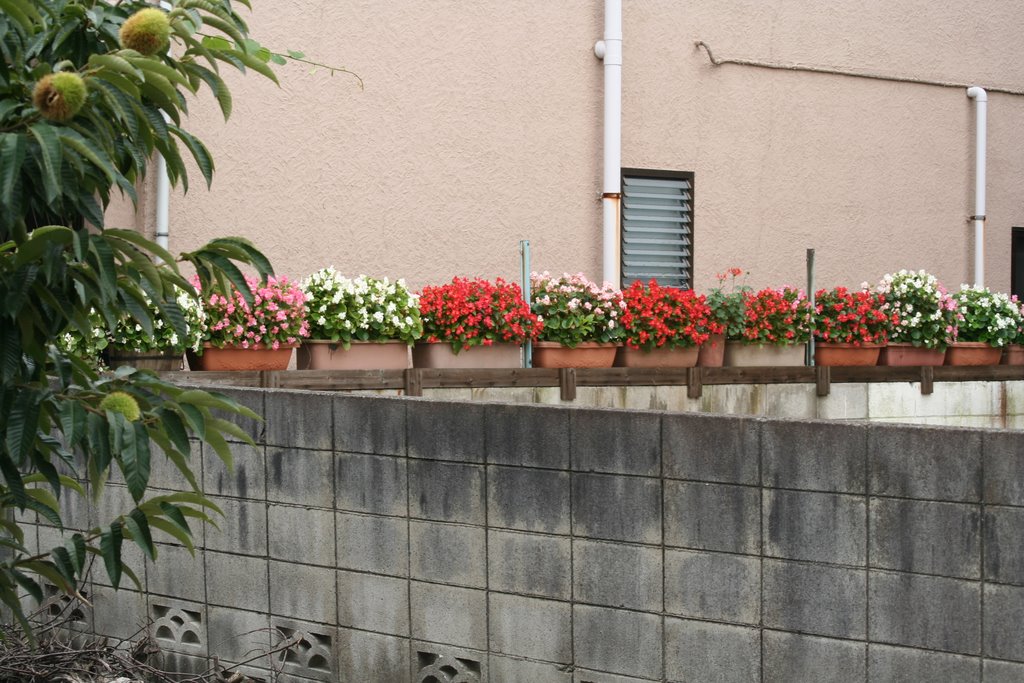
There is a "garden" of begonias near the chestnut trees.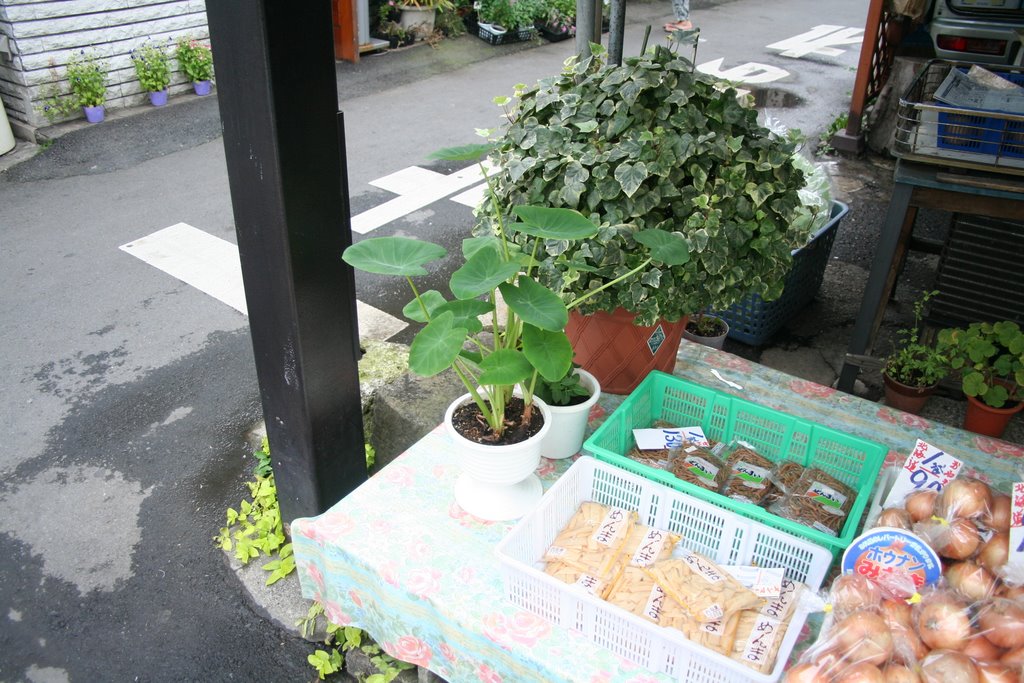
Speaking of potted plants, here is a taro plant in a white plastic pot (see the September 7th post "Elephant Ears?") I saw this potted taro at a vegetable shop.

This looks like a plant we call Elephant Ears in the States (at least where I come from). This is the field behind our house. There are a lot of these plants in the fields in my neighborhood. They get as high as an elephant's eye.
These plants are called sato imo. Imo means potato. Actually, these plants are taro plants. I will post a picture when they are harvested. I am sure I will post other pictures of the plants. Water beads up on them and they look like crystals.
There are different kinds of potatoes here. Some are like the ones that are sold in the U.S. They have thinner skins, though. They are used in stews and curries. One fall day when my children were in kindergarten, they had to wear their rain boots and take a shovel to school. They went to dig potatoes. They brought some of them home. They also went once in elementary school. They peeled and cut the potatoes to put in a curry. They ate it for lunch.
 Listed here in For Kids- Japan

 HTJ is listed here.


