
When we entered the room we were asked if we wanted to make a sheet of paper, a bookmark, or three postcards. We all chose to make different things. Papa followed a woman over to a table and paid for the projects.
Then we were given a small plastic container and were told to choose three leaves that we would use in our projects. I didn't get a picture of this step. I chose to make a sheet of paper. A woman demonstrated the steps as we all watched.
She put a bamboo screen into the paper-making frame or sugeta.
She showed us how to hold the sugeta and how to get the pulp and water mixture into the frame without messing it up. She showed us how to move it around and then how to slosh out the extra mixture. It looked easier than it was. Little Brother later told me that a thin piece of paper means you're good at paper-making. My piece of paper turned out thick!
She took the screen out of the frame and showed us how to carefully lay out the thin layer of paper mixture on the conveyer belt of the press.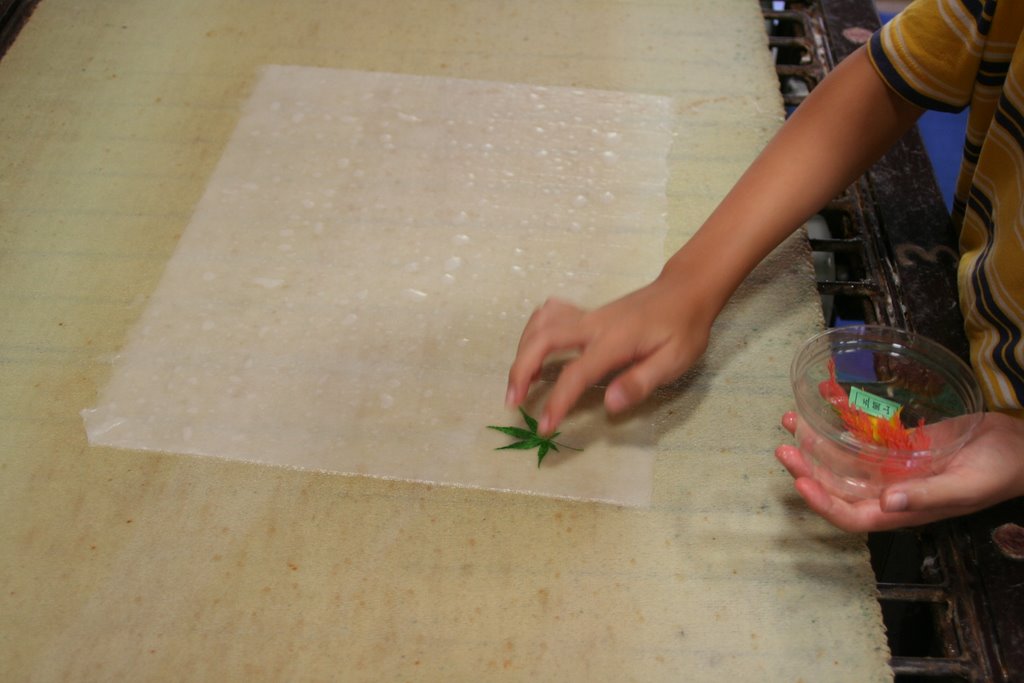
At this stage the dried leaves were put on.
Then it was run through a press to remove excess water and to flatten it.
It was then smoothed out on this table before it was put on the metal dryer.

Since this was a workshop for tourists who couldn't wait for the paper to dry naturally on its own, the paper was put on this metal dryer. Still, it took about 15 minutes to dry.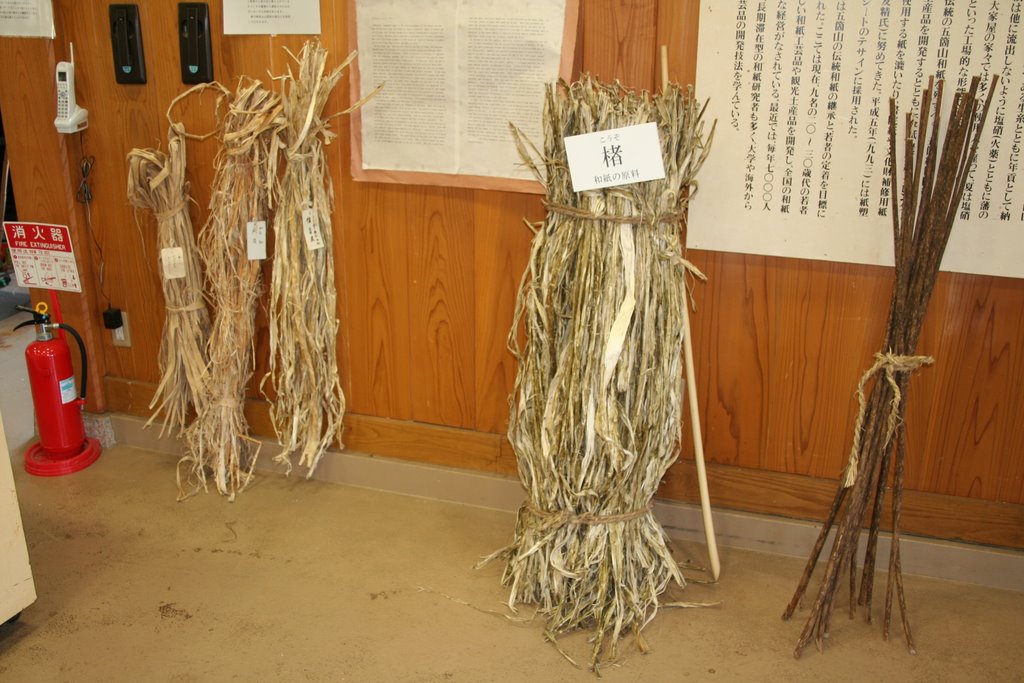
As we were waiting for our projects to dry, I looked around. This bark from the kozo tree is the material that was traditionally used to make paper. It has a stickiness that is useful in making paper. The small limbs on the right would have been stripped like the bundles on the left and then soaked.
August 20, 2006
Making Paper

Making Postcards

Postcards looked a little easier to make. The shaking and sloshing didn't need to be as carefully done. The postcard frame was dipped in the pulp mixture and moved around a bit to get the pulp evenly distributed. It was held over the vat and drained.
Leaves were placed on each card.
The pulp water was spooned onto the cards.
The frame was taken off the screen. A woman then shaped the cards with a plastic spatula-like tool.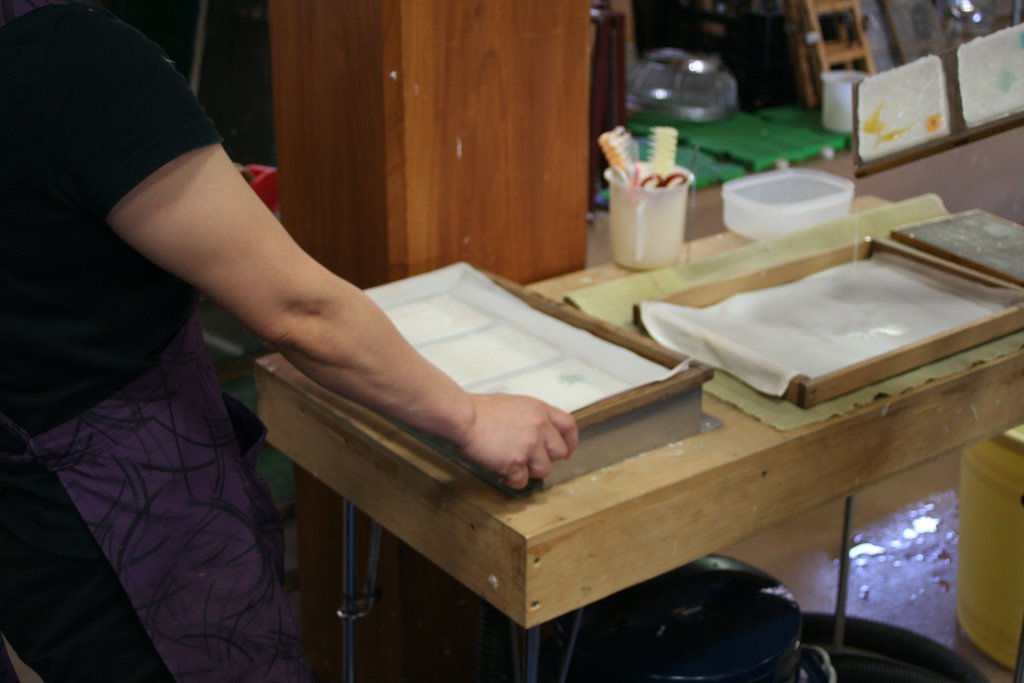
The cards were then run across a dryer. The dryer was a flat metal surface that had a slit along its center. The water was sucked out of the cards.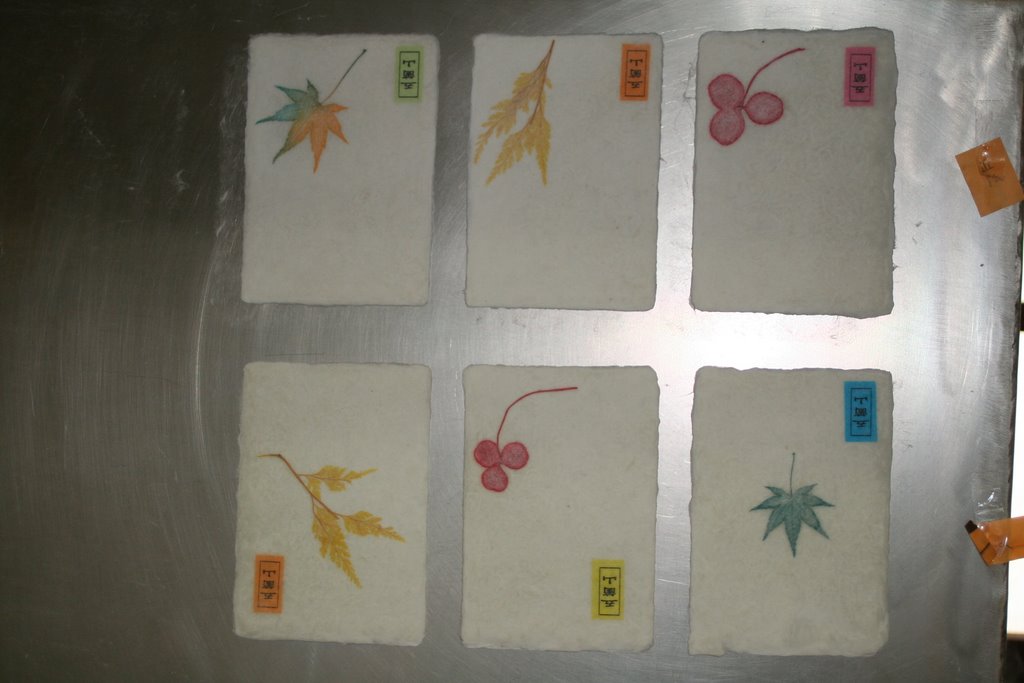
They were then placed on the hot metal dryer. These are the cards Papa and Big Sister made.
August 19, 2006
Japanese Paper Experience House

We stopped in a small town for the paper making experience. It was the first time for Papa and me to have this experience. The children had made a class visit to make paper at a place in Tokyo. (Note the sign. It's amazing how much English there is here, isn't it?)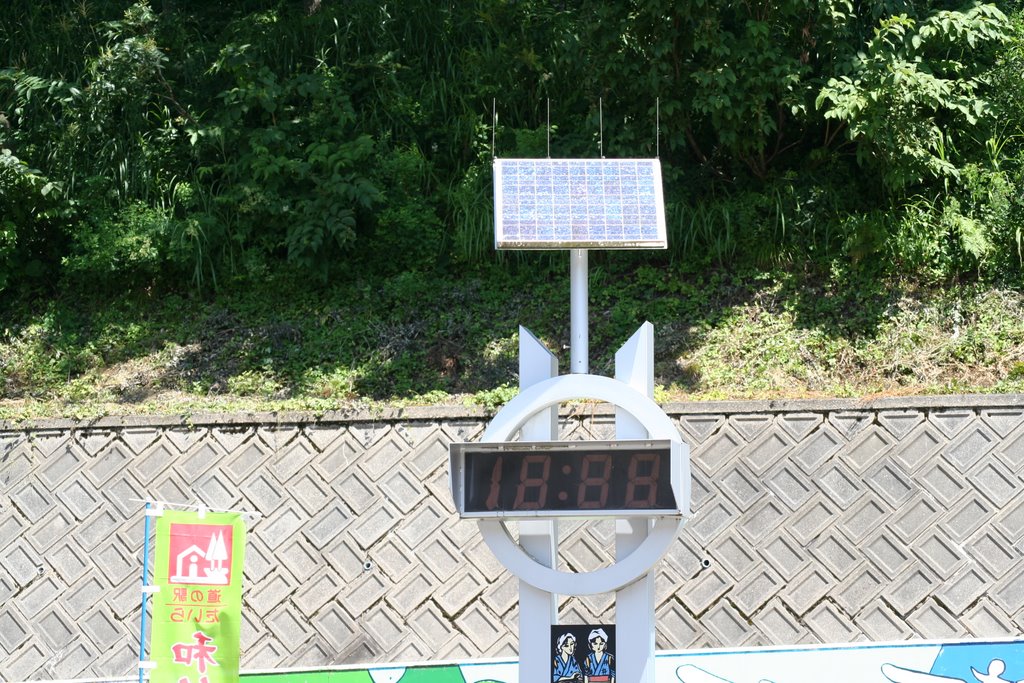
This solar clock was in the parking lot. But at second look, what time is that?
This was a gorgeous handmade paper in the window of the shop. The glare of the glass and the sun makes it hard to see the delicate paper.
We looked through the shop before going to the "Japanese Paper Experience House". Here's some bright handmade paper or washi.
More paper. Some with patterns. In the background, there are items made out of the paper.
These are shelves of items made out of washi. There are small wastepaper baskets or trash bins on the top shelf. Shopping bags and letter boxes are on the second shelf and pencil caddies on the third.


